
You do your best to convince yourself it is not that noticeable. But every time you catch a certain angle in the mirror, the scar pulls your attention back. Whether it sits on your face, chest, arm, or back, it changes how you see yourself. Many people accept their scars because they believe nothing can genuinely be done. The truth is, different types of scars respond differently to treatment, and most of them can be significantly improved.
Understanding which types of scars you have is the first real step toward addressing them. Scar revision at Sculpta Aesthetics is built around exactly that: identifying your scar type and matching it to a treatment that works.
Not all scars are the same, and treating them as though they are leads to poor results. A flat, discoloured patch requires a completely different approach from a thick, raised scar. Before any scar reduction treatment begins, the surgeon needs to assess the scar’s structure, age, cause, and the surrounding skin’s response. This is why a detailed consultation is the starting point at Sculpta Aesthetics. Two people can have scars from the same surgery and experience very different healing. That is why scar revision is never a one-size-fits-all procedure.
Keloid Scars: When the Body Over-Heals
A keloid forms when the body produces too much collagen during the healing process. The scar grows beyond the original wound boundary and does not stop on its own. Keloids feel firm, appear raised, and can itch or become painful over time. They are one of the most common types of scars seen in people with deeper skin tones, though they can affect anyone.
Keloids often appear on the chest, shoulders, earlobes, and upper back. They tend to grow progressively if left untreated. Scar reduction treatment for keloids at Sculpta Aesthetics may combine steroid injections, surgical excision, and adjunct therapies to flatten the scar and reduce recurrence risk. The goal is not just removal, it is ensuring the keloid does not return.
Because keloids have a high rate of recurrence, our treatments are carefully planned to minimize skin trauma, ensuring a safe and controlled healing response.
Hypertrophic Scars: Raised But Contained
Hypertrophic scars look similar to keloids at first glance, but they behave differently. These scars are raised and thickened but stay within the original wound boundary. They commonly develop after burns, trauma, or surgical incisions that experience tension during healing. Unlike keloids, hypertrophic scars can fade gradually over time, though they rarely disappear completely without treatment.
These are among the types of scars most responsive to scar revision. Benefits of treatment include:
- Significant improvement in texture and elevation.
- Visible reduction in redness and thickness.
- Enhanced comfort and skin flexibility.
Corticosteroid injections, laser resurfacing, and surgical revision all show strong results. When patients see their scar revision before and after photographs, hypertrophic scars often produce the most visually striking improvements.
Atrophic Scars: Depressions That Sit Below the Skin
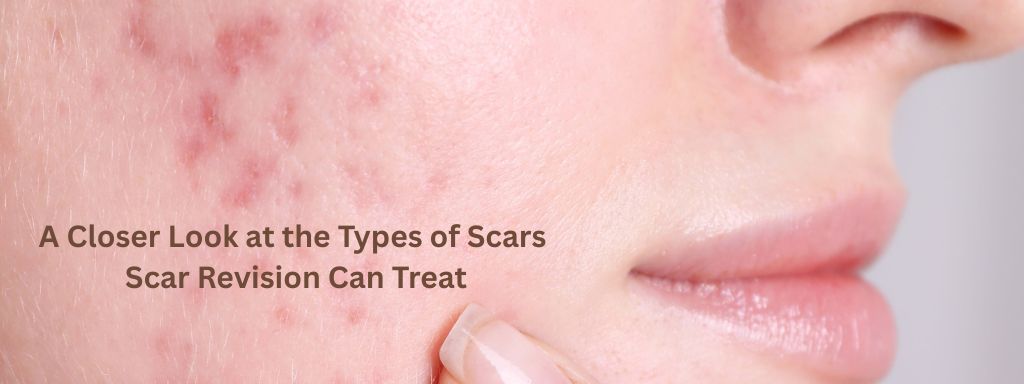
Atrophic scars form when the skin loses tissue during the healing process, creating a sunken or pitted appearance. These are among the most common types of scars caused by acne and chickenpox. They vary in shape, some are broad and shallow, some are narrow and deep, and some have sharp edges that cast a visible shadow on the skin.
The three main subtypes are rolling scars, boxcar scars, and icepick scars. Each subtype requires a different treatment approach. Scar reduction treatment for atrophic scars may include:
To gently plump up depressed areas and restore a smooth surface.
To safely stimulate your skin's natural collagen production.
To release the deep fibrous bands pulling the skin down.
Additionally, advanced laser resurfacing and fat grafting (using your own tissue to restore volume from within) are highly effective options to safely smooth the skin surface.
Contracture Scars: When Scarring Affects Movement
Contracture scars develop after burns or injuries that affect a large skin surface. As the skin heals, it tightens and pulls the edges together, which can restrict movement in the affected area. These scars are not just a cosmetic concern; they can genuinely limit the function of joints, fingers, or other mobile areas of the body.
These types of scars require surgical correction in most cases. Techniques such as Z-plasty or skin grafting release the contracted tissue and restore normal movement. The surgical approach redirects tension so the scar line no longer pulls against the body’s natural range of motion. Results are both functional and aesthetic, which is why scar revision for contracture scars is often considered medically necessary rather than purely cosmetic.
Post-Surgical and Traumatic Scars
Some scars form after planned surgeries or injuries and heal in a way that leaves them wider, darker, or more textured than expected. Poor wound closure, infection, or skin tension during healing can all produce scars that are more visible than they need to be. These are among the most treatable types of scars because the surgeon can work with a well-defined scar edge.
Post-surgical scars on the abdomen, chest, or face are commonly addressed through surgical excision and re-suturing, laser treatments, or dermabrasion. The results can be remarkably precise, helping to blend the scar into the surrounding skin.
Acne Scars: More Than Just a Skin Concern
Acne scars are one of the most emotionally taxing types of scars because they cover the most visible part of the body: the face. They develop when severe acne damages the deeper layers of the skin and disrupts collagen production during recovery. The result can be widespread pitting, uneven texture, and discolouration that significantly affect confidence.
Scar reduction treatment for acne scars at Sculpta Aesthetics is highly individualised. Most patients present with a combination of scar types, and a layered treatment plan that combines multiple techniques produces far better results than any single procedure.
Scar Management Does Not End in the Treatment Room
Here is something patients often do not expect: the procedure is only part of the process. What you do in the weeks after treatment plays a real role in how the scar finally settles. Post-procedure care typically involves:
- Maintenance laser sessions: To control redness and pigmentation.
- Topical medications: Silicone-based gels or prescribed creams to support collagen remodelling.
- Scar massage: To break down internal tissue adhesions and keep the healing scar flexible.
At Sculpta Aesthetics, this aftercare plan is never an afterthought. It is built into your treatment from day one, with clear guidance on what to do, how often, and for how long.
Why Choose Sculpta Aesthetics for Scar Revision
Every scar at Sculpta Aesthetics receives a thorough assessment before any treatment plan is designed. The clinic combines surgical precision with advanced non-surgical techniques to address all types of scars effectively. Treatment plans are built around your specific scar anatomy, skin type, and desired outcome, never from a standard template. Dr. Vashisht Dikshit brings both surgical expertise and an understanding of how different skin types heal, ensuring your safety and satisfaction throughout the journey.