
Why Your Hair Transplant Failed – Common Mistakes & How to Fix It?
Understanding a Failed Hair Transplant
A hair transplant is often a life-changing procedure, but when the results don't meet expectations, it can be a source of significant distress. A hair transplant is generally considered unsuccessful when it fails to achieve a natural look or healthy growth. Key indicators of a failed procedure include:
- Poor or patchy hair growth: Large areas where the transplanted hair fails to sprout.
- Artificial or "pluggy" hairline: A hairline that looks unnatural, often resembling doll's hair.
- Low density: The hair looks thin and sparse, failing to provide adequate coverage.
- Graft failure: A high percentage of the transplanted follicles do not survive the transition.
- Misaligned expectations: The final result is significantly different from what was promised or envisioned.
Top Reasons Why Hair Transplants Fail
Identifying the root cause of a failed transplant is the first step toward a solution. Most failures stem from a combination of clinical errors and poor planning.
- Poor Surgical Technique: This is the leading cause of dissatisfaction. It includes placing grafts at incorrect angles, over-harvesting the donor area (leaving it thin), or improper handling of the delicate follicles during the transfer process.
- Flawed Hairline Design: A successful hairline requires an artistic touch. If the hairline is too straight, too low, or doesn't account for the patient's age and future hair loss, the result will look fake and obvious.
- Low Graft Survival: Hair grafts are living tissue. If they spend too much time outside the body, become dehydrated, or are handled roughly, they will not survive the transplantation process.
- Inadequate Long-Term Planning: Many clinics focus solely on the number of grafts rather than the donor area's capacity or the progression of the patient's natural hair loss. This leads to results that may look okay initially but worsen over time.
- Choosing Unqualified Clinics: In many regions, including India, there is a rise in technician-driven procedures where a qualified surgeon is barely involved. Choosing a clinic based solely on the lowest price often leads to irreversible damage to the donor area.
- Poor Post-Operative Care: The patient's role is crucial. Failing to follow washing instructions, smoking or consuming alcohol too soon after surgery, or skipping prescribed medications can jeopardize the grafts.
- Unrealistic Expectations: While modern transplants are advanced, they cannot restore the exact density of one's teenage years. Success depends heavily on the quality and quantity of the available donor hair.
Signs Your Hair Transplant Is Going Wrong
It is important to monitor your progress during the recovery phase. Warning signs include:
- No visible growth after 6 to 8 months.
- Patchy or uneven density across the recipient site.
- A donor area that looks depleted or over-harvested.
- Hair growing in the wrong direction or at unnatural angles.
Can a Failed Hair Transplant Be Fixed?
The good news is that corrective surgery is often possible, though it requires a high level of expertise. Repair options include:
- Repair Hair Transplant: Removing and redistributing poorly placed grafts.
- Hairline Redesign: Softening an unnatural hairline to create a more organic look.
- Increasing Density: Adding more grafts to thin areas to improve coverage.
- Alternative Donor Sources: Using beard or chest hair grafts if the scalp donor area is exhausted.
- Medical Therapy: Supplementing surgery with PRP (Platelet-Rich Plasma) or medications to strengthen existing hair.
What Makes a Hair Transplant Successful?
At NG Plastic Surgery in Ahmedabad, the focus is on precision and long-term aesthetics rather than just immediate numbers. A successful procedure is built on:
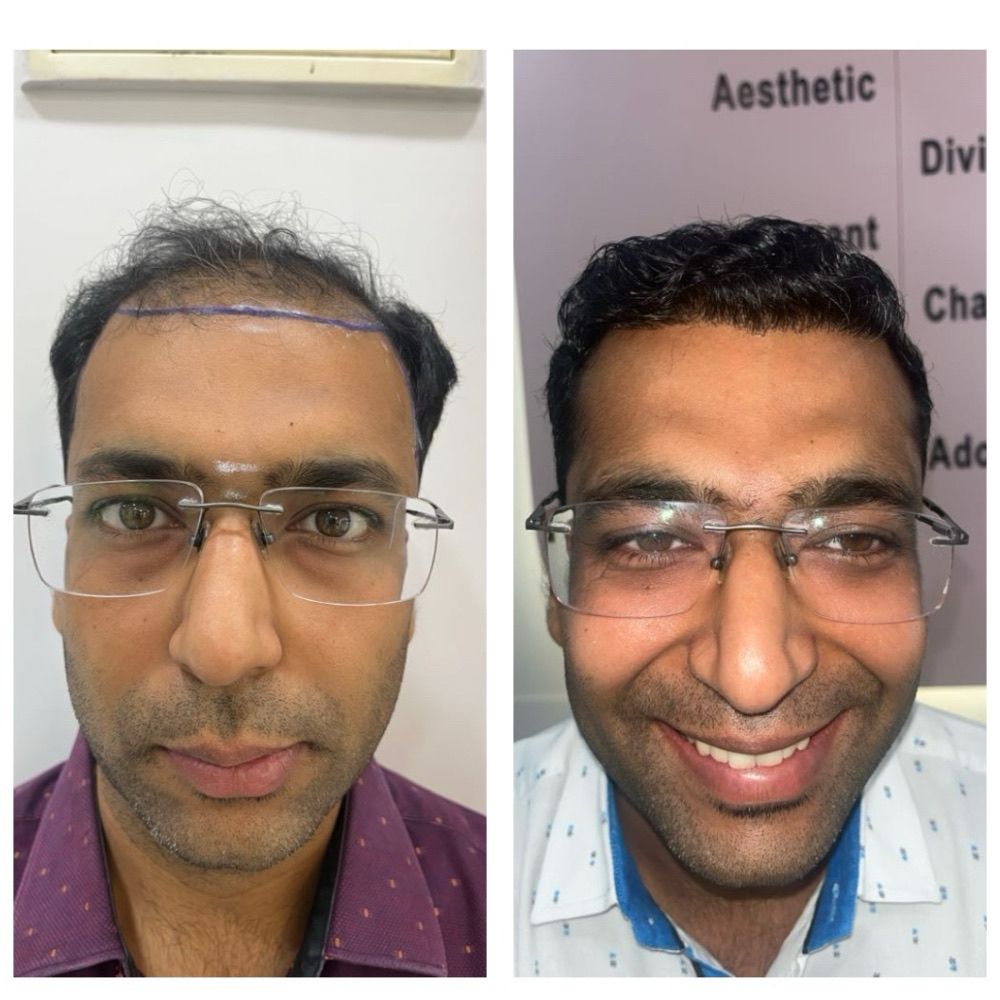
- Natural Hairline Design: Tailoring the hairline to the individual's facial structure and age.
- Comprehensive Planning: Accounting for future hair loss to ensure the transplant looks good for decades, not just months.
- Minimal Donor Damage: Using advanced techniques to preserve the donor area for potential future needs.
- Surgeon-Led Procedures: Ensuring every critical step is performed by a qualified surgeon, not just technicians.
- Personalized Approach: Treating every patient’s hair loss pattern as unique.
Final Takeaway: A hair transplant is a long-term aesthetic investment. Choosing the right surgeon and clinic based on quality and expertise is far more important than finding the cheapest option. Your hair is a permanent part of your appearance—treat it with the care it deserves.