

Understanding the Dilemma: Gym or Surgery?
“Doctor, gym karu ya surgery karu?” (Doctor, should I hit the gym or go for surgery?)
This is perhaps the most frequent question men ask when they are struggling with excess chest tissue, commonly referred to as "man boobs." In an era of fitness influencers and social media transformations, many men are led to believe that a few more sets of bench presses will solve the problem. However, from a medical perspective, the answer isn't always found on a weight rack.
If you are confused about whether to choose the gym or surgery for gynecomastia in Ahmedabad, this guide provides a science-backed breakdown to help you make an informed decision for 2026 and beyond.
What Exactly is Gynecomastia?
Gynecomastia is the enlargement of male breast tissue. It is important to understand that this condition is often more than just "extra fat." It is typically caused by an imbalance between the hormones estrogen and testosterone. Other contributing factors include genetics, certain medications, obesity, or the use of anabolic steroids.
The Critical Distinction: Gynecomastia often involves the development of glandular tissue. Unlike fat, which is soft and can be burned for energy, glandular tissue is firm, dense, and biologically different. It does not respond to diet or exercise in the same way fat does.
When the Gym Can Help: Pseudo-Gynecomastia
The gym is an excellent tool if you are dealing with pseudo-gynecomastia. This is a condition where the chest appears enlarged strictly due to an accumulation of adipose (fat) tissue, without the presence of a hard gland.
In these cases, a dedicated fitness regimen can yield great results:
- Caloric Deficit: Reducing overall body fat will naturally reduce the fat stored in the chest area.
- Strength Training: Exercises like chest presses and flies build the pectoral muscles, providing better shape and "lift" to the chest wall.
- Cardio: Helps in increasing the total burn, leading to a leaner physique.
When the Gym Falls Short
If you have true gynecomastia, no amount of exercise will "burn away" the glandular tissue. You might find that even as you get leaner and your arms and legs get more defined, your chest remains puffy or retains a feminine shape. This happens because:
- Glandular tissue is not a fuel source for the body; it cannot be metabolized through exercise.
- Intense chest workouts can sometimes make the problem look more prominent by pushing the glandular tissue forward as the muscle underneath grows.
- Puffy nipples are almost always a sign of glandular involvement, which exercise cannot fix.
How to Identify: Fat vs. Gynecomastia
Use the following table to help identify what you might be experiencing:
| Feature | Fat (Pseudo-Gynecomastia) | True Gynecomastia |
|---|---|---|
| Texture | Soft and squishy | Firm, rubbery, or knot-like |
| Location | Spread across the chest | Concentrated behind the nipple |
| Nipple Appearance | Usually flat/normal | Often puffy or protruding |
| Response to Gym | Improves with weight loss | Little to no change in shape |
Self-Test Tip: If you feel a firm, rubbery disc directly under the areola, it is highly likely you have glandular tissue that requires medical intervention.
Gynecomastia Surgery: The Definitive Solution
For those with true glandular tissue, surgery is the only way to achieve a flat, masculine chest contour. Modern surgical techniques are minimally invasive and designed for rapid recovery.
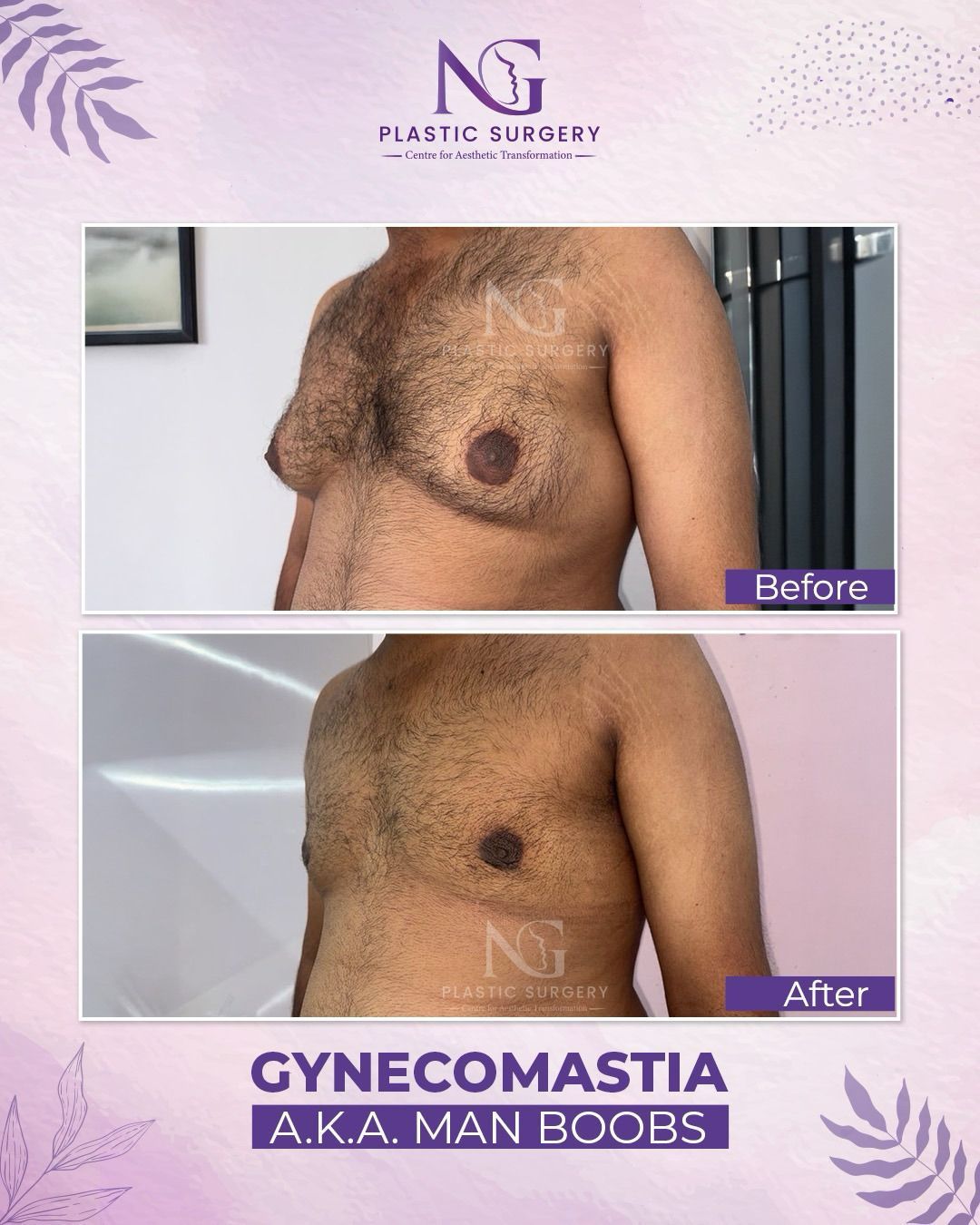
The Surgical Approach
Most procedures involve a combination of two techniques:
- Liposuction: To remove the fatty component and sculpt the chest borders.
- Gland Excision: A small incision is made (usually along the edge of the areola) to physically remove the firm glandular tissue.
This dual approach ensures that the cause of the puffiness is gone forever and the chest looks naturally contoured.
Gym vs. Surgery: A Final Comparison
| Factor | Gym / Diet | Surgical Correction |
|---|---|---|
| Targets Fat | Yes | Yes |
| Targets Gland | No | Yes |
| Timeline | Months to years | Immediate results |
| Permanency | Requires constant maintenance | Permanent (if weight is stable) |
Cost of Gynecomastia Surgery in Ahmedabad
In Ahmedabad, the cost of the procedure is influenced by the grade of gynecomastia (how much tissue needs to be removed), the technology used (like VASER or Laser liposuction), and the facility's standards. Generally, prices range from ₹50,000 to ₹1,20,000.
Recovery and Life After Surgery
One of the biggest misconceptions is that surgery requires a long hiatus from life. In reality:
- Discharge: Most patients go home the same day or the next morning.
- Work: You can typically return to a desk job within 2–3 days.
- Fitness: You can resume light walking almost immediately, though heavy gym sessions should wait for 3–4 weeks.
- Support: You will wear a compression garment for 4–6 weeks to help the skin adhere to the new chest contour.
Frequently Asked Questions
Can the gym cure gynecomastia completely?
No. If there is glandular tissue present, exercise cannot dissolve it. It can only reduce the surrounding fat.
Will it come back after surgery?
Once the gland is surgically removed, it does not grow back. However, significant weight gain or the use of certain performance-enhancing drugs can cause new fat accumulation or hormonal shifts.
Is the surgery painful?
The procedure is performed under anesthesia, so you feel nothing. Post-operative discomfort is usually mild and easily managed with standard pain relievers.
Conclusion: Take the Right Step
The gym is vital for your health, but it isn't a cure-all for medical conditions like gynecomastia. If you have been training hard for 6–12 months without seeing a change in your chest shape, it is time to stop the frustration and seek a professional evaluation.
At NG Plastic Surgery in Ahmedabad, we specialize in advanced gynecomastia correction that prioritizes natural-looking, masculine results with minimal scarring.