

Understanding the Unique Needs of Indian Skin
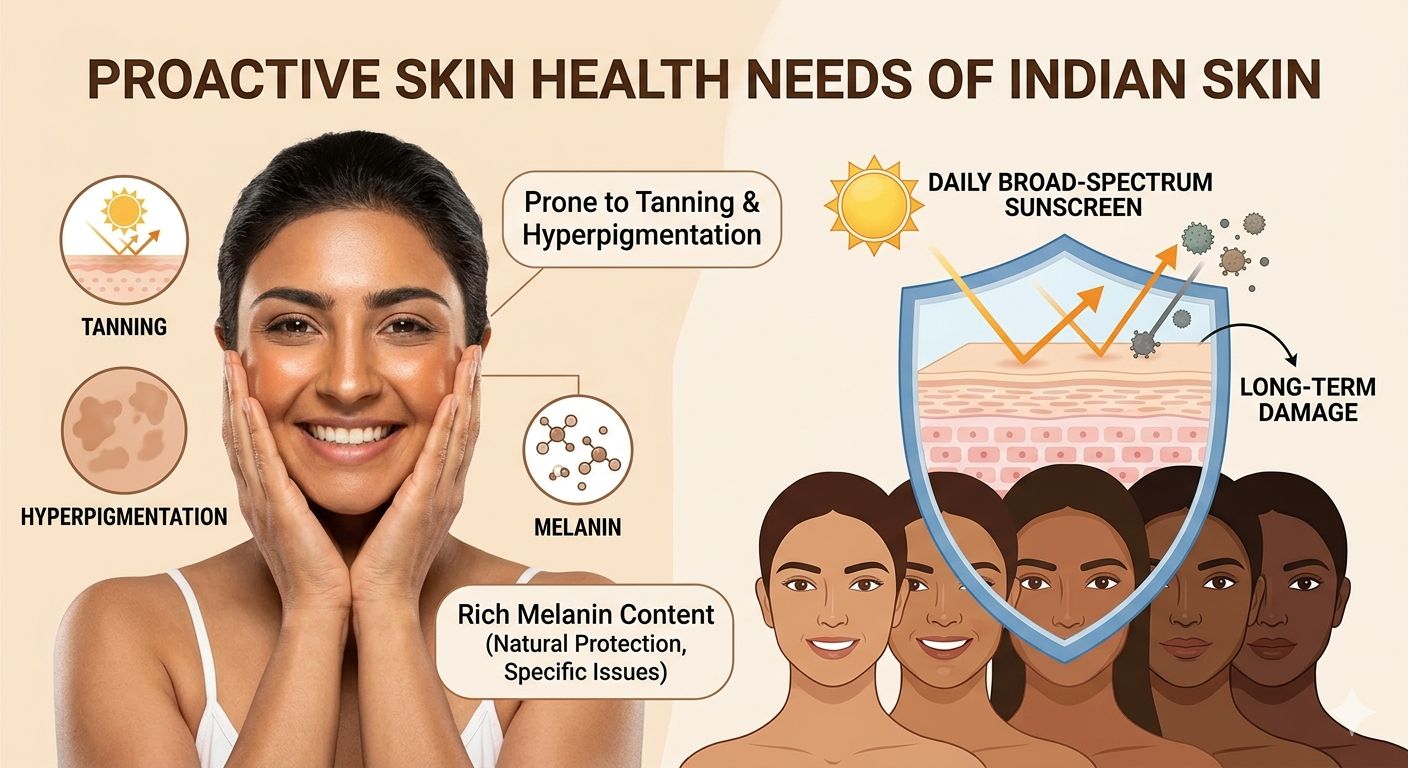
When it comes to skincare, a one-size-fits-all approach rarely works, especially in a diverse geographical landscape like India. One of the most common misconceptions is that sun protection is universal. However, Indian skin is biologically different from Western skin, primarily due to its higher melanin content. While Western skin types (often categorized as Fitzpatrick scales I and II) are prone to painful sunburns and DNA damage from minimal sun exposure, Indian skin (typically scales III to VI) has a built-in natural defense. But this defense comes with its own set of challenges.
Instead of turning red and peeling, Indian skin reacts to UV radiation by producing more melanin. This results in tanning, stubborn hyperpigmentation, and an uneven skin tone. Because our skin is more reactive to pigment changes, daily sun protection isn't just about preventing burns; it is about maintaining clarity and preventing long-term structural damage.
Why Every Sunscreen Isn't Right for the Indian Context
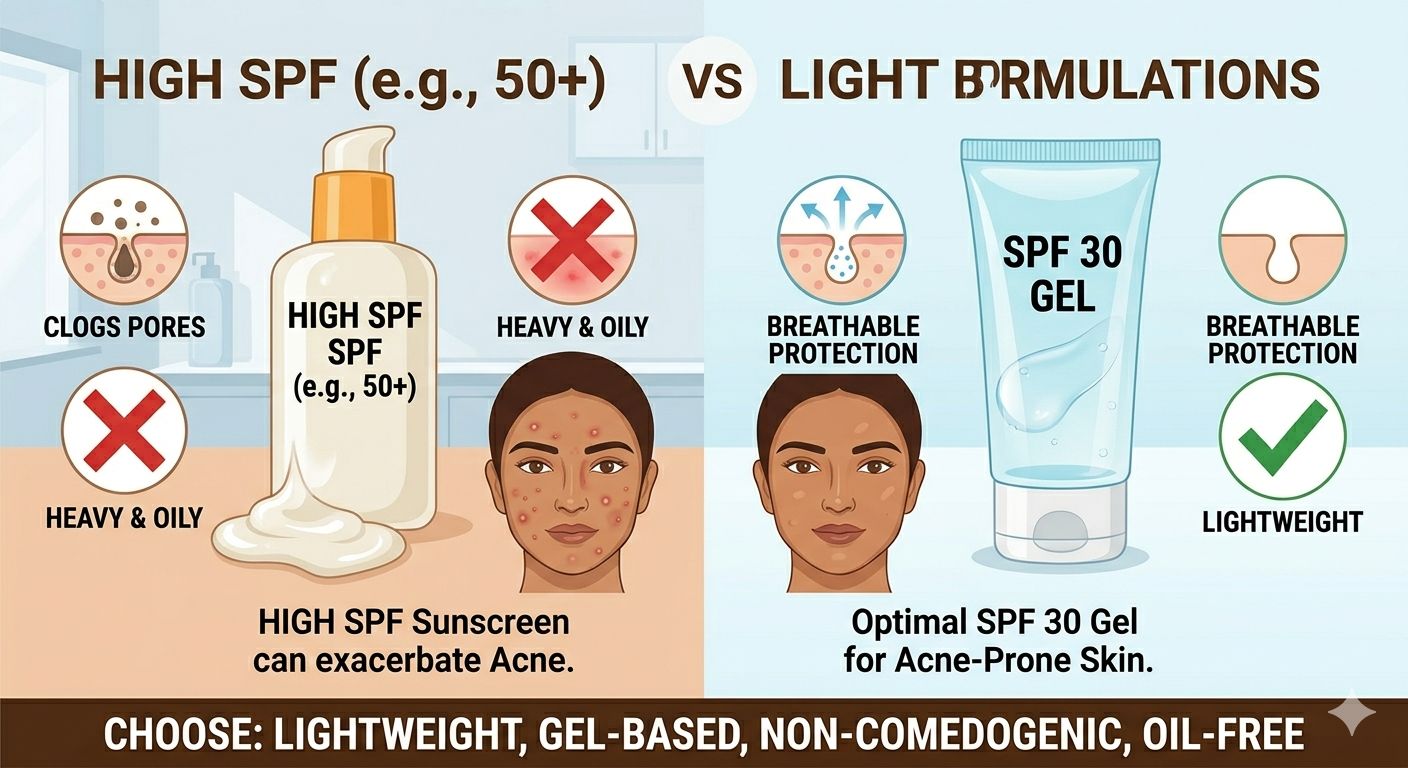
Many sunscreens available on the global market are formulated for cooler, drier climates and lighter skin tones. For the Indian consumer, these products can often feel heavy, greasy, or leave a noticeable white cast that looks ashy on deeper skin tones. Furthermore, the intense humidity in many parts of India means that heavy, cream-based sunscreens can trap sweat and sebum, leading to clogged pores and breakouts.
For those struggling with acne, the choice of sunscreen is critical. There is a common myth that a higher SPF is always better. In reality, high SPF products (like SPF 50 or 100) can be quite thick and comedogenic. These formulations often use higher concentrations of chemical filters or physical blockers that can aggravate sensitive or acne-prone skin. For daily use in the Indian climate, a lightweight, gel-based SPF 30 is often the optimal choice. It provides a breathable barrier that protects the skin without triggering a cycle of breakouts.
The SPF Myth: 30 vs. 50
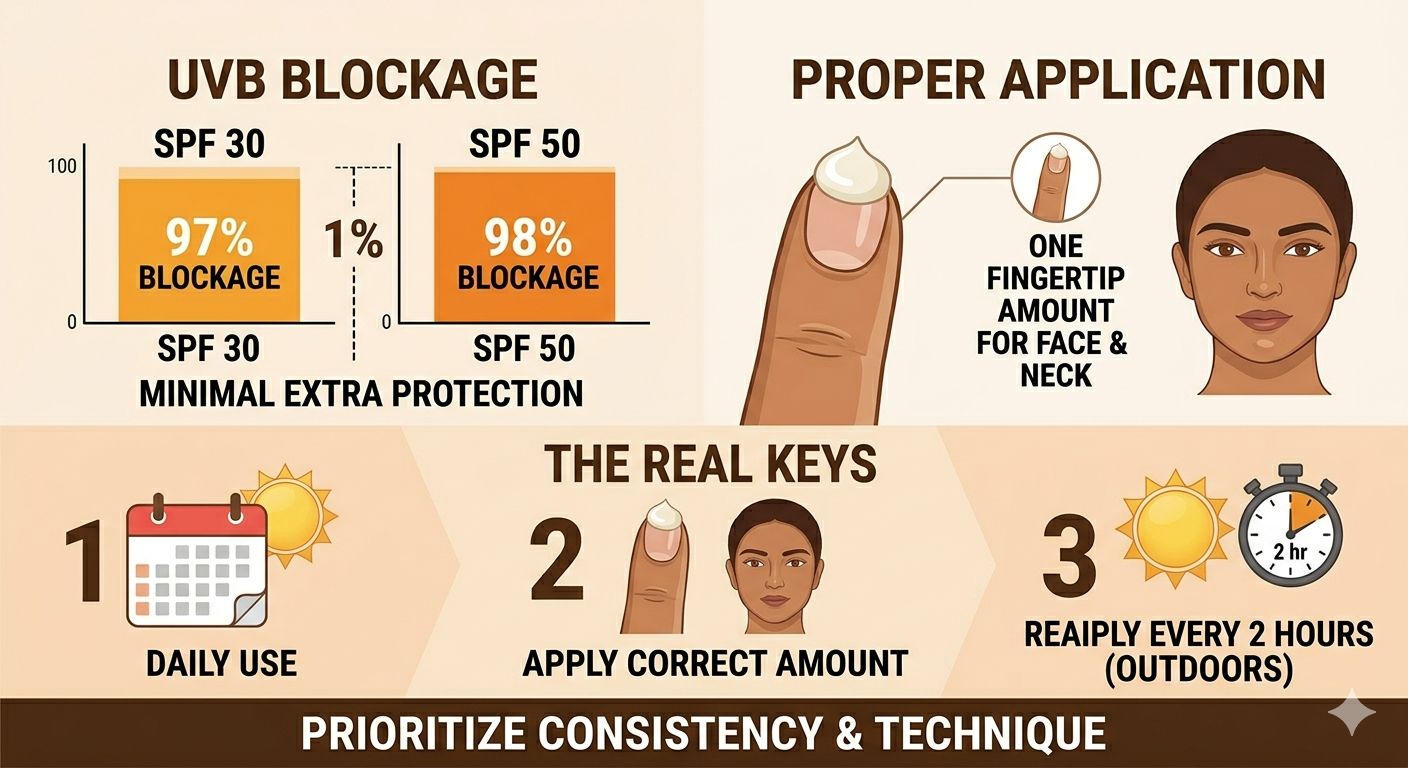
It is important to understand what the numbers actually mean. SPF 30 blocks approximately 97% of UVB rays, while SPF 50 blocks about 98%. The 1% difference in protection is marginal, yet the difference in texture and potential skin irritation can be significant. Many dermatologists suggest that for Indian skin, consistency and proper application are far more important than the SPF number on the bottle. Instead of chasing the highest number, look for "broad-spectrum" labels that protect against both UVA (aging) and UVB (burning) rays, and seek out skin-loving ingredients like niacinamide for soothing or antioxidants to combat urban pollution.
How to Apply Sunscreen for Maximum Efficacy
No matter how expensive your sunscreen is, it won't work if you don't use enough of it. Most people apply only a fraction of the required amount. To get the labeled protection, you should follow the "fingertip rule": apply a generous strip of sunscreen along the length of your index finger to cover your face and neck entirely.
Consistency is the final piece of the puzzle. Sunscreen filters break down over time when exposed to direct sunlight and can be washed away by sweat. If you are outdoors, you must reapply every two hours to maintain protection. For those indoors, a single morning application may suffice, provided you aren't sitting directly by a window.
By choosing the right formula and mastering the application technique, you can protect your skin's natural radiance and prevent the premature signs of aging. Protect your skin wisely for a healthy, lasting glow!