
Teenage gynecomastia, characterized by the development of firm glandular tissue in the male chest, is more than just a physical change. For many young men in Nagpur and beyond, the psychological impact is significant. Often, the feeling of not being heard or understood by adults becomes more frustrating than the physical condition itself.
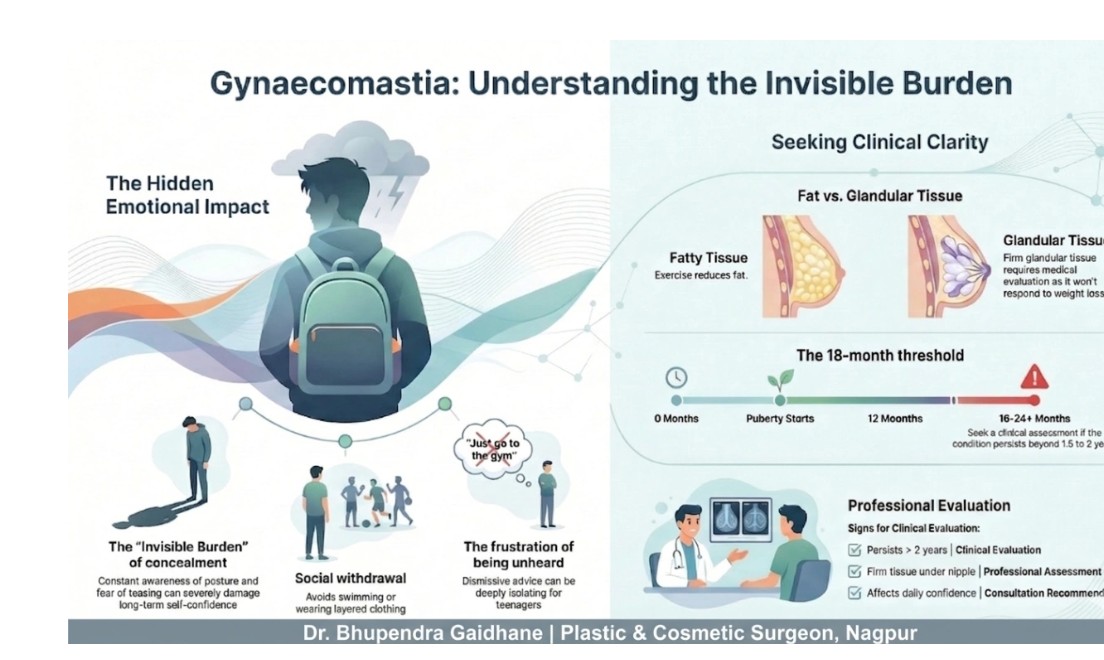
It is important to recognize that this condition can deeply affect a teenager's self-esteem, social interactions, and overall quality of life during a critical stage of development.
A Note to Parents: Listening with Empathy
If your son has brought this concern to your attention, it likely took a great deal of courage. Many teenagers hesitate for months, or even years, before speaking about their chest appearance. By the time they find the words, the concern is often already affecting their confidence and daily activities, such as participating in sports or choosing what to wear.
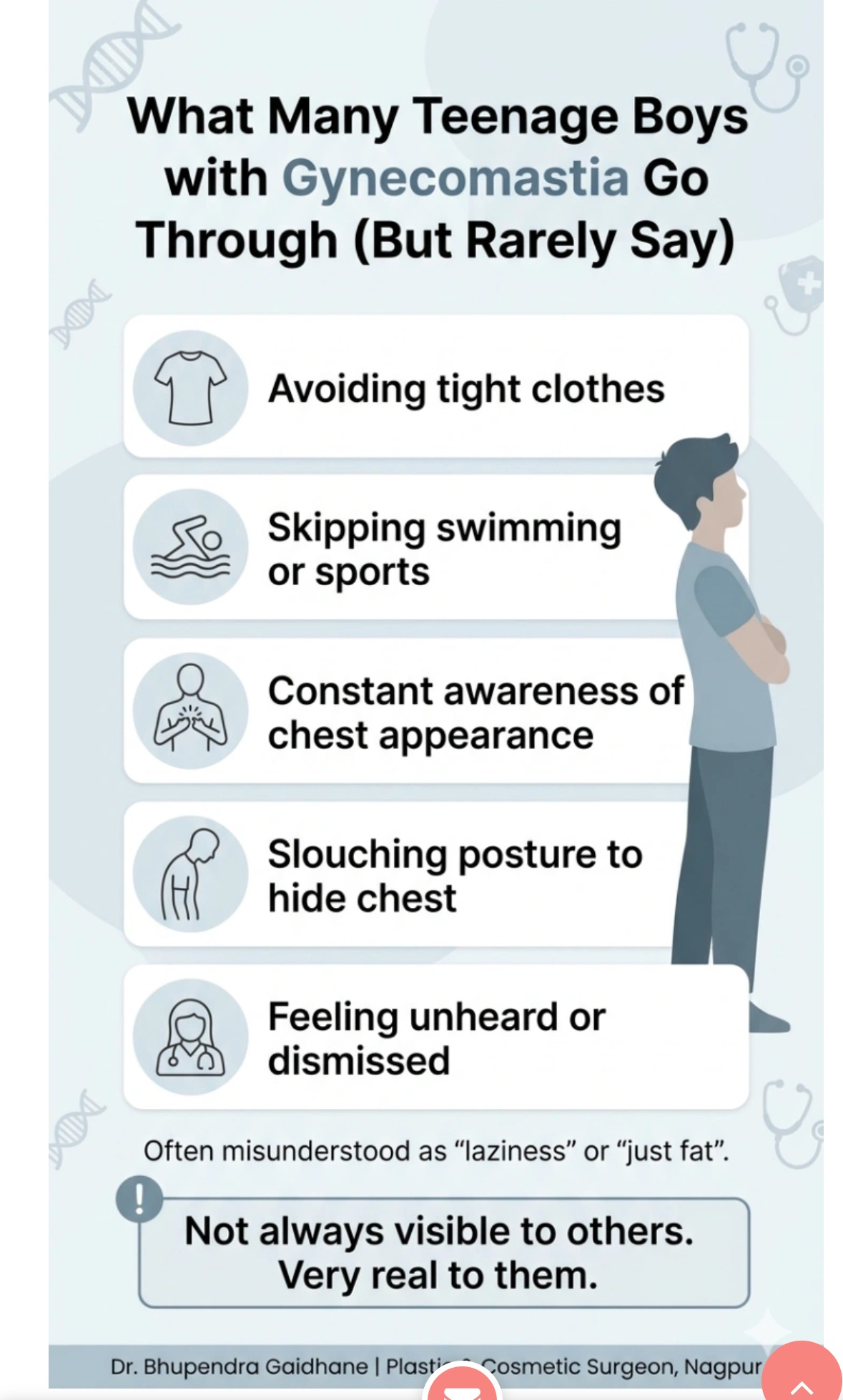
Even if the condition turns out to be temporary, the emotional impact is very real in the present. Listening without dismissing their concern is the vital first step. Seeking a clinical evaluation does not mean immediate surgery; rather, it provides the clarity and professional reassurance both you and your son need.
Does Teenage Gynecomastia Go Away?
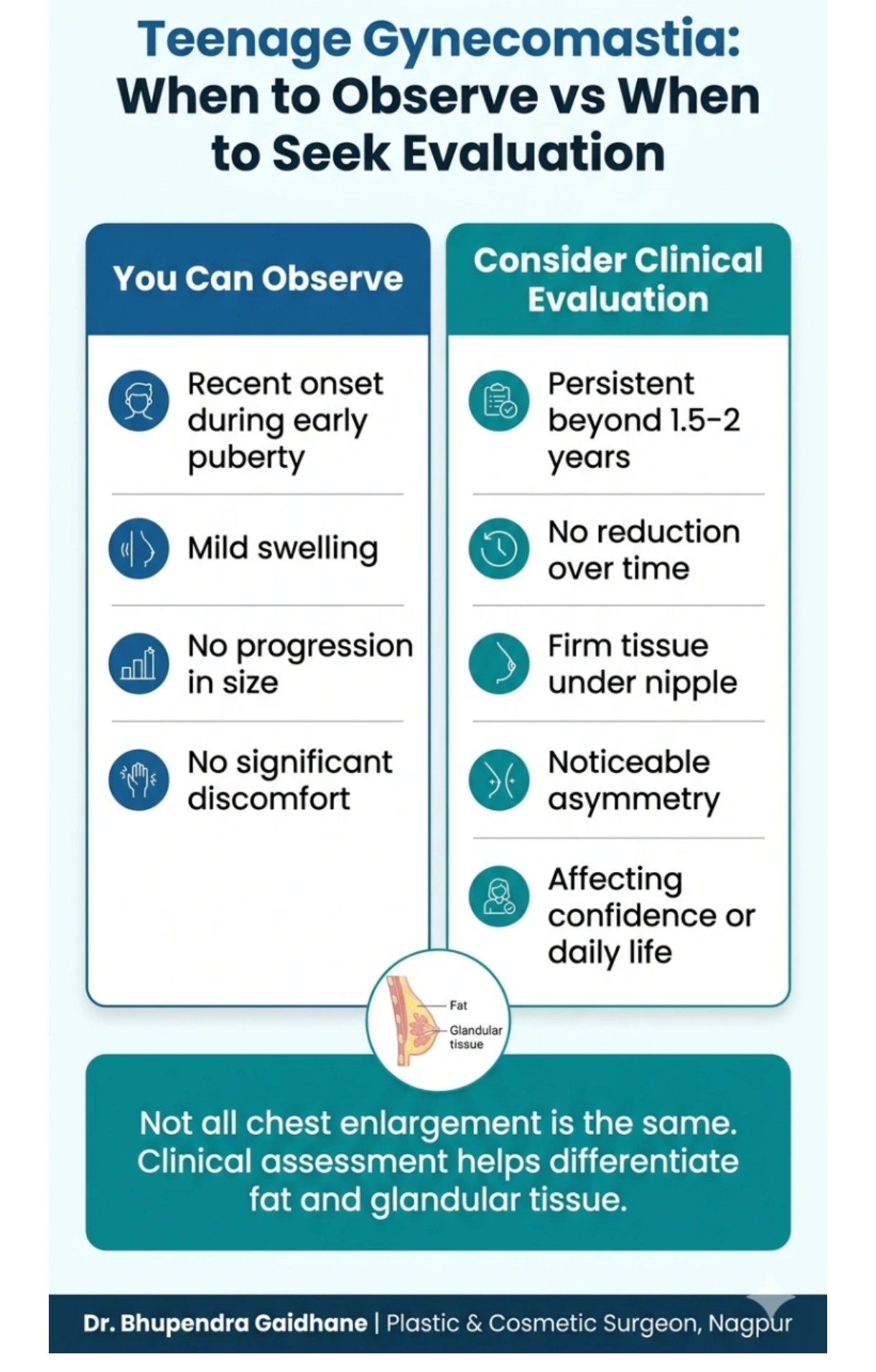
In many cases during early puberty, gynecomastia is a transient phase that resolves on its own as hormones balance out. However, a clinical evaluation becomes important if you notice the following:
- Persistence: The condition lasts beyond 1.5 to 2 years.
- No Reduction: There is no noticeable decrease in size over time.
- Tissue Texture: Presence of firm, rubbery tissue directly under the nipple.
- Asymmetry: A noticeable difference in size or shape between the two sides.
- Lifestyle Impact: The condition is significantly affecting the teenager's confidence or daily life.
Why Exercise Doesn’t Always Help
A common misconception is that chest prominence can be "worked off" at the gym. While exercise and a healthy diet can effectively reduce body fat (often called pseudogynecomastia), true glandular tissue does not respond to weight loss or strength training. This explains why many teenagers improve their overall fitness and lose weight but still notice a persistent prominence in the chest area.
The Reality of Glandular Tissue
During the treatment process, many parents are surprised when they see the actual glandular tissue and fat removed. A common reaction is: "We didn’t realize this was the reason… we thought it was just fat." This highlights how often the condition is misunderstood as a simple weight issue rather than a hormonal or structural development that requires medical insight.
When to Consider Evaluation and Treatment
A proper clinical assessment by a specialist helps determine the exact nature of the condition. The evaluation will identify whether the prominence is caused by fat, glandular tissue, or a combination of both, and whether it is likely to resolve naturally based on the stage of puberty.
If treatment is deemed appropriate, the approach is tailored to the individual's needs to ensure a natural chest contour:
- Liposuction: Used to address the fatty component and contour the surrounding area.
- Glandular Excision: Required when firm glandular tissue needs to be surgically removed.
- Combination Approach: Often the best method to achieve a balanced, masculine chest contour.
The ultimate goal of intervention is to restore a natural appearance and, more importantly, to provide the young man with the confidence to move forward without self-consciousness.