

One of the most common concerns men face when considering gynecomastia surgery is the recovery process. It is natural to wonder how long the healing will take and what the day-to-day experience will feel like. While many patients worry about severe pain or being confined to bed for weeks, the reality is that recovery is typically smooth and manageable when you follow professional post-operative instructions.
In this guide, Dr. Bhupendra Gaidhane, a leading plastic surgeon in Nagpur, breaks down the recovery journey. We will explore the week-by-week timeline, the vital role of compression garments, specialized massage techniques, and when you can safely return to your fitness routine.
Key Takeaways for Your Recovery
- Quick Return to Activity: Most patients can resume light daily activities within just a few days.
- The Importance of Compression: Wearing a compression garment is critical for reducing swelling and shaping the chest.
- Normal Side Effects: Temporary swelling, firmness, or numbness is a standard part of the healing process.
- Timeline for Results: Most swelling subsides by the 6-week mark, with the final chest contour becoming fully visible around 3 months post-surgery.
Immediately After Gynecomastia Surgery
Gynecomastia surgery aims to restore a flatter, more masculine chest contour by removing excess glandular tissue and fat. This is often achieved using advanced Vaser Liposuction (Lipovase) technology, which uses ultrasound energy to gently break down fat cells while preserving surrounding tissues for a smoother result.
Right after the procedure, you may feel slightly drowsy as the anesthesia wears off. Common immediate experiences include:
- A mild "mental fog" or dizziness for a few hours.
- A feeling of tightness in the chest caused by surgical dressings.
- Minimal pain, as surgeons typically use local anesthetic techniques to keep you comfortable during the initial hours.
Before you are discharged to go home, your surgical team will ensure you can walk independently, drink fluids, and pass urine normally. Light walking is actually encouraged on the very first day to promote healthy circulation.
The First Night at Home
Being in a familiar environment often makes the first night of recovery much easier. To ensure a comfortable night, follow these tips:
- Sleep Position: Sleep on your back with your upper body slightly elevated. Using a few extra pillows can help reduce swelling and make it easier to get in and out of bed.
- Arm Movement: Avoid raising your arms above shoulder level to prevent strain on the incision sites.
- Preparation: Keep essentials like water, prescribed medications, and your phone within easy reach.
Gynecomastia Surgery Recovery Timeline
The healing process follows a predictable path as the body repairs itself and swelling gradually dissipates.
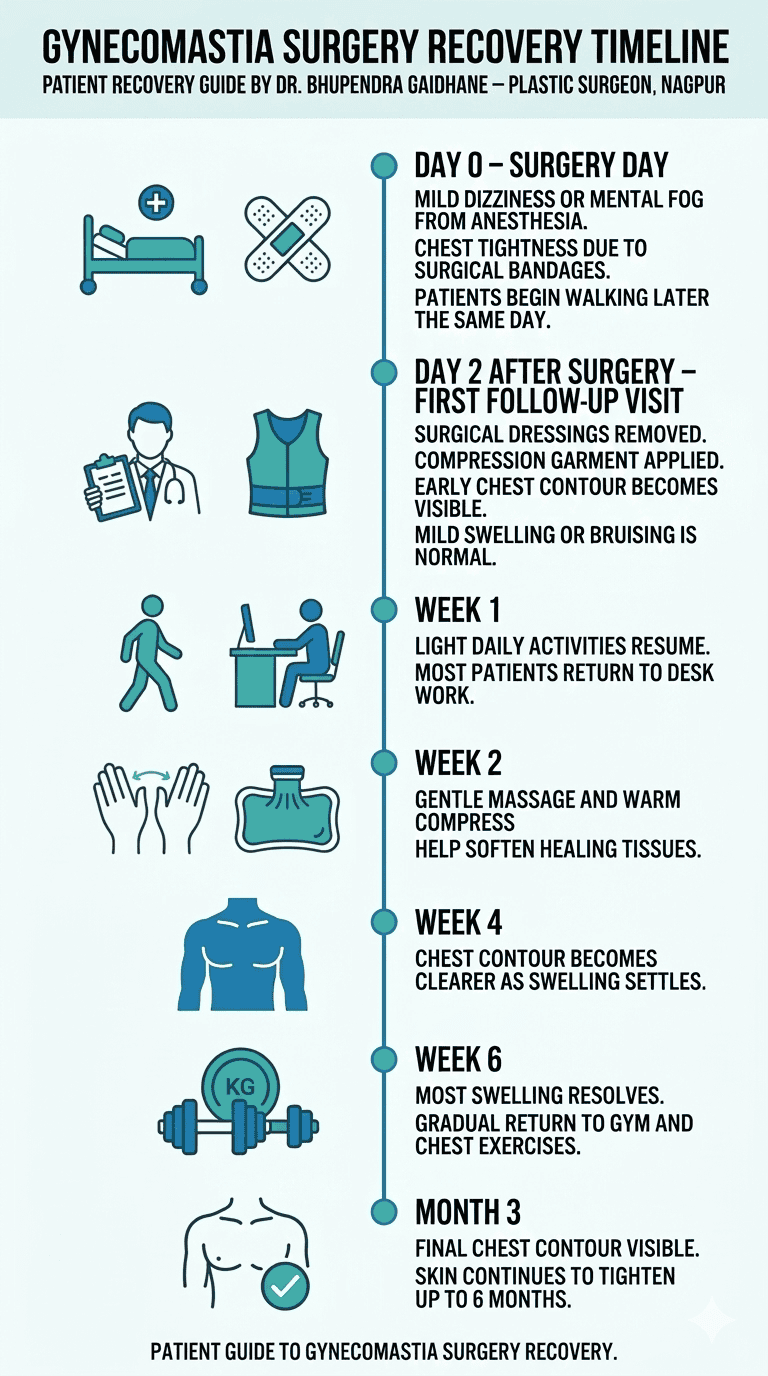
Day 2: The First Follow-Up
During your first post-operative visit, the surgical dressings are removed, and you will be fitted with a specialized compression garment. Many patients find this garment much more comfortable than the initial bandages, and you will likely see an immediate improvement in your chest contour.
Week 1: Returning to Routine
By the end of the first week, most patients are back to light daily activities. If you have a desk job, you can usually return to work within 3 to 4 days. While some bruising and swelling will still be present, the initial discomfort should have significantly faded.
Week 2: Tissue Softening
Swelling continues to decrease during the second week. This is often when your surgeon will clear you to begin gentle massage techniques to help the tissues stay supple.
Week 6: Resuming Exercise
By week six, the majority of the swelling has resolved. This is the milestone where most patients can return to the gym. However, it is important to reintroduce chest-specific exercises slowly and listen to your body’s signals.
Month 3: Final Results
At the three-month mark, the internal tissues have softened, and the skin has retracted. This is typically when you will see the final, refined shape of your new chest contour.
The Role of Compression Garments
Compression garments are not optional; they are a vital tool in your recovery kit. They serve several purposes: they minimize the risk of fluid buildup (seroma), support the healing tissues, and help the skin adhere smoothly to the new chest shape.
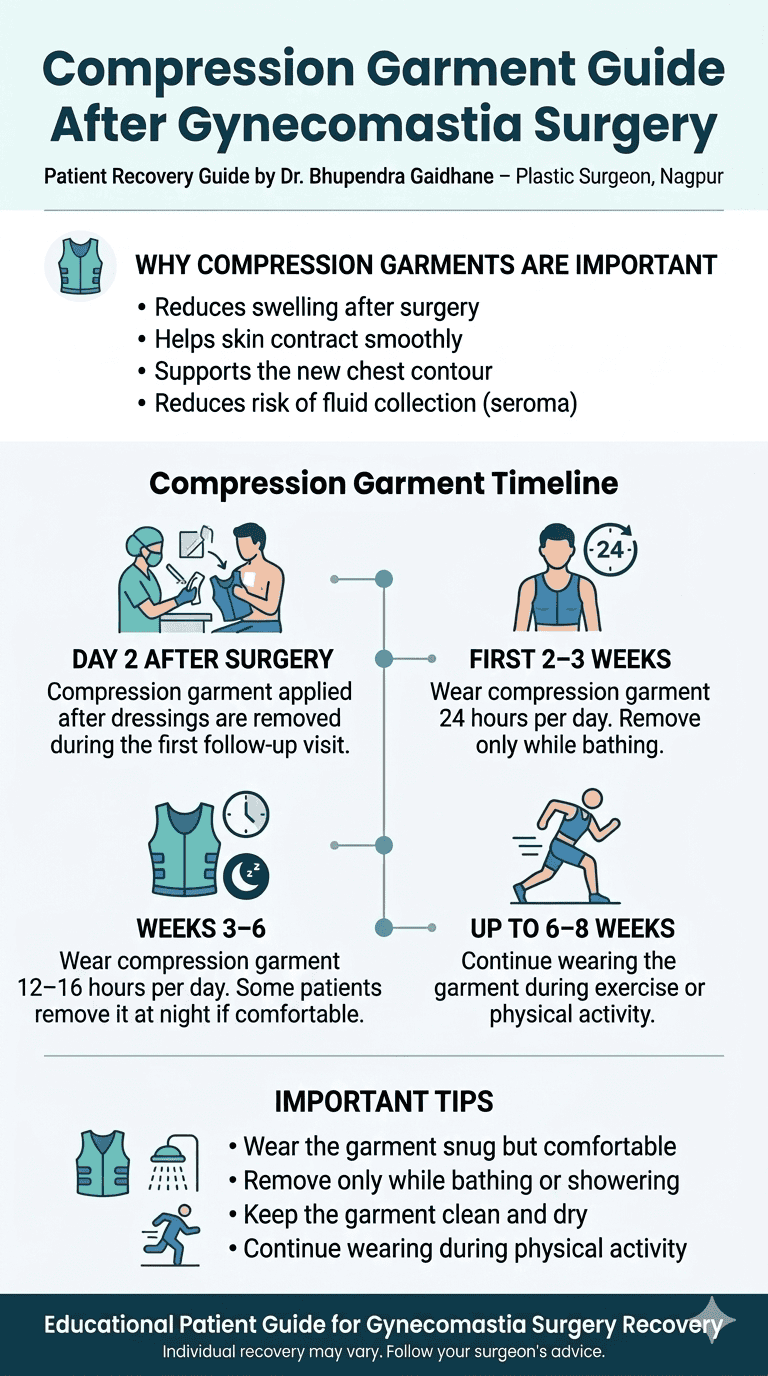
Recommended Schedule:
- Weeks 1–3: Wear the garment 24/7, removing it only for showering.
- Weeks 3–6: Wear the garment for approximately 12–16 hours per day (usually during the daytime).
- After Week 6: Some patients may choose to wear it during high-impact physical activities for extra support.
Massage and Tissue Care
Post-operative massage is essential for breaking up internal scar tissue and ensuring the chest feels natural and soft.
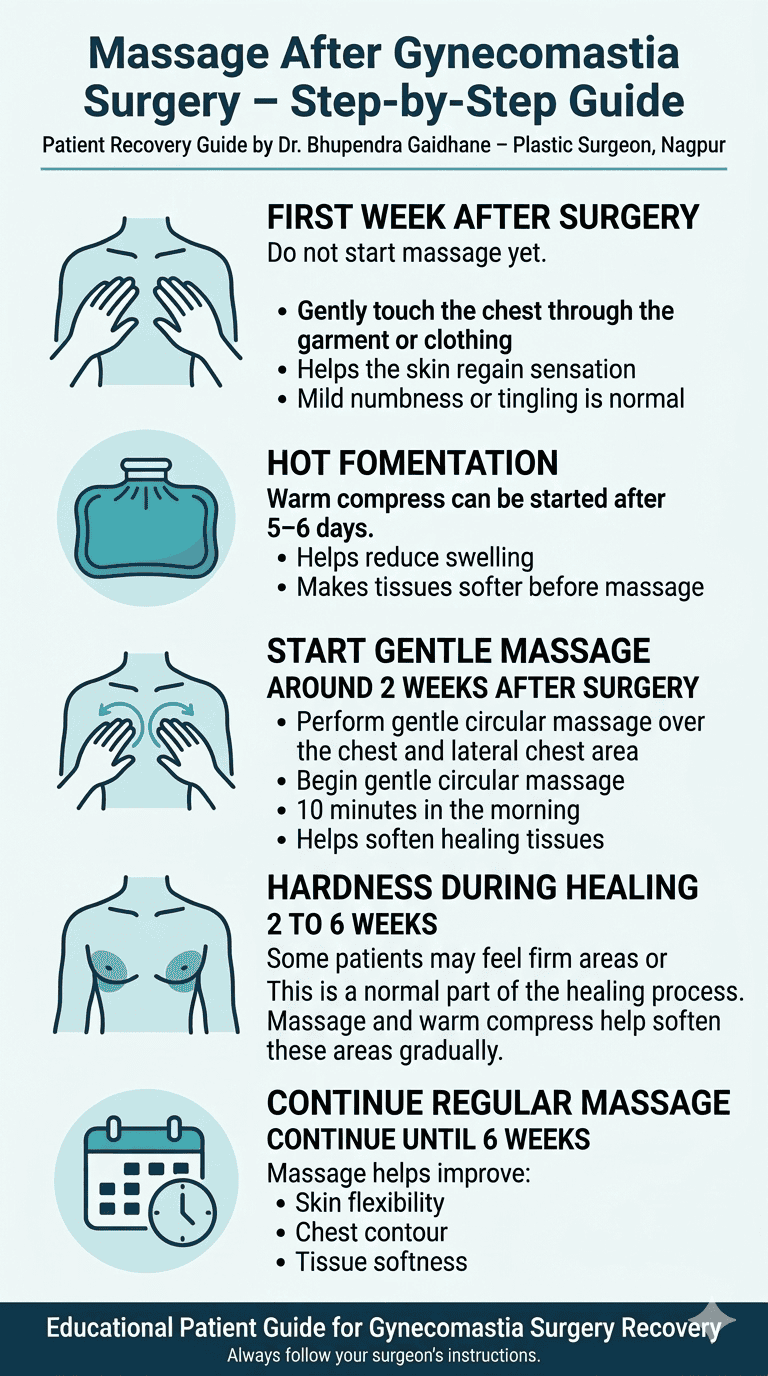
- The First Week: Simply touching the area gently through the garment helps the nerves recover and can reduce feelings of numbness or tingling.
- After 5–6 Days: You may begin using warm compresses to soothe stiffness and soften the area.
- After Two Weeks: You can start gentle circular massages. Aim for 5–10 minutes twice daily, gradually increasing the pressure as the area becomes less sensitive.
Understanding the "Hard Phase" (Weeks 2–6)
It is very common for patients to notice firm areas or lumps under the skin between the second and sixth weeks. This is known as the "hard phase" and is caused by the body forming internal scar tissue as part of the natural healing response. Do not be alarmed—this firmness is temporary and will resolve with consistent massage, warm compresses, and time.
Returning to Physical Activity
While rest is important, staying mobile is key to a healthy recovery. Here is a general guide for resuming activities:
- Walking: Start on day one.
- Driving: Usually safe after 7–8 days, once you have full range of motion and are no longer taking pain medication.
- Light Cardio: Brisk walking or light cycling can typically begin after two weeks.
- Heavy Lifting/Gym: Wait until the six-week mark to ensure the internal incisions are fully healed.
When to Contact Your Surgeon
While complications are rare, you should reach out to your surgical team if you experience any of the following:
- Severe pain that does not improve with medication.
- Rapid swelling on only one side of the chest.
- Fever or chills.
- Redness or discharge at the incision sites.
Why Surgeon Expertise Matters
Gynecomastia surgery is an art as much as it is a medical procedure. A skilled plastic surgeon doesn't just remove tissue; they sculpt the chest to ensure symmetry and a masculine aesthetic. By choosing an experienced surgeon who understands fat distribution and skin elasticity, you ensure a safer recovery and a result you can be proud of.
Frequently Asked Questions
How long does recovery take?
While you'll be back to most activities in a week, full internal healing and final results take about three months.
When can I shower?
Usually, you can shower after your first follow-up visit (around 48 hours after surgery) once the initial dressings are removed.
Is chest hardness normal?
Yes, temporary firmness is a standard part of the healing process and will soften over time with massage.
Download the Complete Recovery Guide
For a more detailed, visual step-by-step look at your journey, we have created a comprehensive handbook. It includes detailed diagrams on massage techniques and a checklist for your recovery milestones.