
Understanding Rhinophyma: A Comprehensive Guide to Treatment and Restoration
Rhinophyma is a progressive skin condition characterized by the thickening and enlargement of the nose, often resulting in a bulbous, irregular, and disfigured appearance. While it is frequently associated with advanced rosacea, it is important to understand that rhinophyma is a distinct, treatable condition. Many individuals living with this condition experience significant self-consciousness and social anxiety, often believing that their appearance is permanent. However, modern aesthetic medicine offers highly effective solutions to restore the natural contour of the nose and improve quality of life.
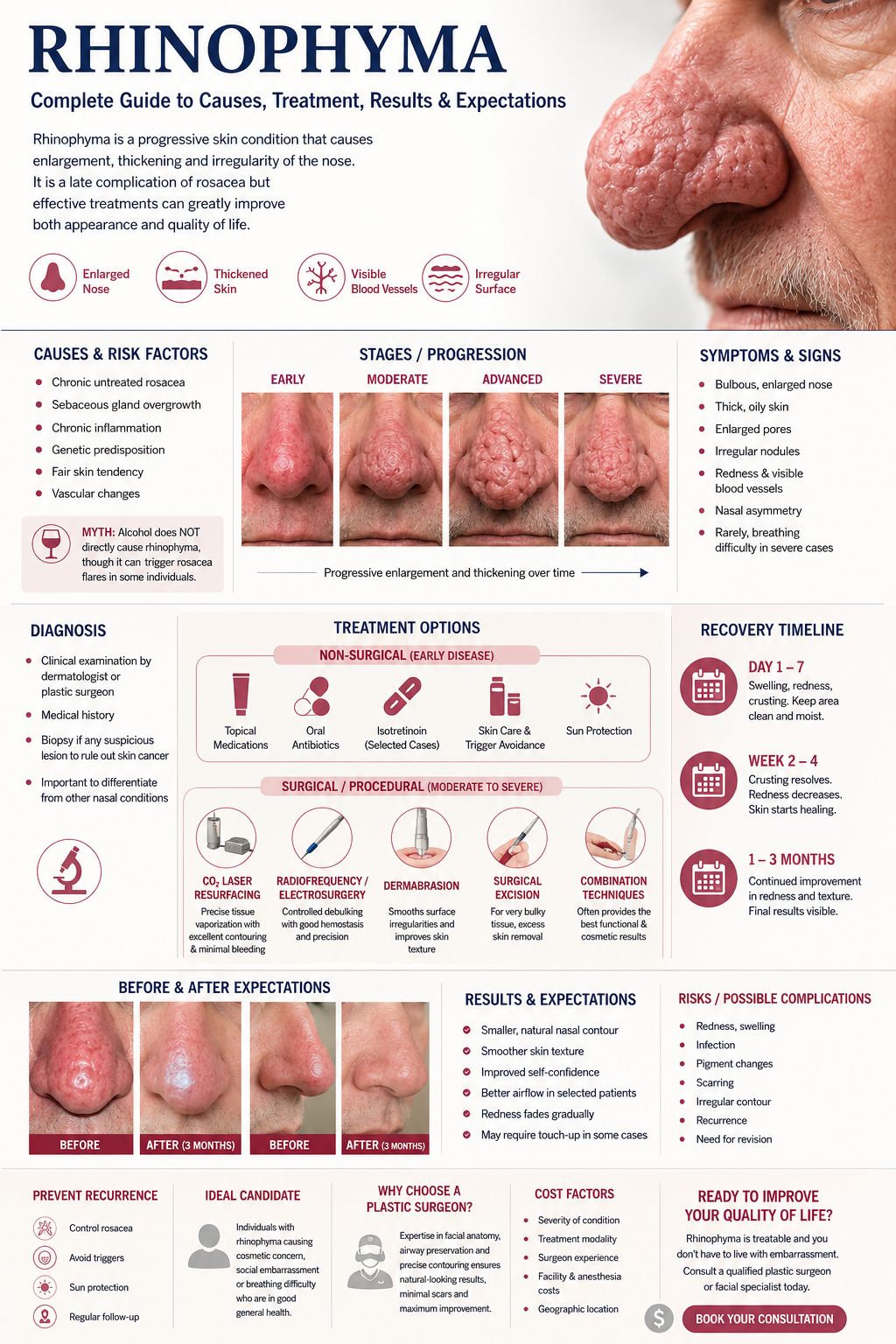
At its core, rhinophyma involves the benign overgrowth of sebaceous glands and connective tissue. While it is not a form of cancer, the physical changes—such as redness, visible blood vessels, and a thickened, oily texture—can be distressing. The good news is that with the right intervention, patients can achieve remarkable improvements in both appearance and confidence.
What is Rhinophyma?
Rhinophyma is a condition where the skin of the nose becomes thickened, bumpy, and enlarged. It is most commonly observed in middle-aged and older men, though it can affect anyone. The condition is essentially an advanced manifestation of rosacea, specifically phymatous rosacea. While the condition itself is benign, it is crucial to have a professional evaluation, as the thickened skin can occasionally mask underlying skin cancers. Early diagnosis and treatment are key to preventing further progression.
Causes and Risk Factors
The exact cause of rhinophyma is multifactorial, involving a combination of chronic inflammation and genetic predisposition. Key factors include:
- Chronic Rosacea: Long-term, untreated rosacea is the most significant risk factor.
- Sebaceous Gland Overgrowth: The oil-producing glands in the nose enlarge and multiply, leading to tissue bulk.
- Genetics: A family history of rosacea or skin sensitivity often plays a role.
- Vascular Changes: Persistent dilation of blood vessels contributes to the characteristic redness.
A Common Myth: It is a persistent misconception that rhinophyma is caused by alcohol consumption. While alcohol can trigger rosacea flare-ups, it is not the direct cause of rhinophyma.
Symptoms and Progression
Rhinophyma typically develops slowly over several years. Symptoms include:
- A bulbous, enlarged nasal tip.
- Thick, oily, and porous skin texture.
- Irregular nodules or bumps on the nasal surface.
- Persistent redness and visible telangiectasia (spider veins).
- Nasal asymmetry.
- In severe cases, the tissue growth may obstruct the nostrils, leading to breathing difficulties.
If you are noticing these changes, we encourage you to reach out to our team for a professional assessment. You do not have to navigate this journey alone. Rhinophyma is highly treatable, and there is no reason to delay consultation or suffer unnecessary embarrassment.
Treatment Options
Treatment for rhinophyma is categorized into non-surgical and surgical approaches, depending on the severity of the tissue growth.
Non-Surgical Management
In the early stages, medical management can help control the underlying rosacea and slow progression. This includes topical medications, oral antibiotics, and in specific cases, isotretinoin. While these treatments are excellent for managing inflammation, they cannot remove existing tissue bulk.
Surgical and Procedural Interventions
For established rhinophyma, surgical debulking is the gold standard. Common techniques include:
- CO2 Laser Resurfacing: This is often the preferred method, as it allows for precise tissue vaporization and excellent contouring with minimal bleeding.
- Electrosurgery/Radiofrequency: These tools allow for controlled removal of excess tissue while simultaneously sealing blood vessels.
- Dermabrasion: Used to refine the surface texture of the skin after the bulk of the tissue has been removed.
- Scalpel Excision: Reserved for cases with significant tissue overgrowth where traditional resurfacing may not be sufficient.
Recovery and Results
The recovery process typically involves a period of healing where the skin regenerates. Most patients experience swelling and redness in the first week, which gradually subsides over the following month. The ultimate goal is a smaller, more natural nasal contour and improved skin texture. While the results are transformative, it is important to maintain a consistent skincare routine and follow-up with your specialist to manage any underlying rosacea.
Why Choose Anant Aesthetic Clinic?
At Anant Aesthetic Clinic in Adampur, we specialize in advanced facial rejuvenation and reconstructive procedures. Our clinic is led by Dr. Sumit Toor and Dr. Pratibha Toor, both of whom are dedicated to providing patient-centered, expert care. We understand the emotional impact of rhinophyma and strive to provide a supportive, professional environment where your concerns are heard and addressed with the highest standard of medical excellence.
Frequently Asked Questions
- Is rhinophyma caused by alcohol? No, this is a myth. It is a skin condition related to rosacea.
- Can creams cure rhinophyma? Creams can manage inflammation but cannot remove established tissue bulk.
- Is surgery painful? Procedures are performed under local anesthesia or sedation to ensure patient comfort.
- Will it come back? With proper rosacea management and sun protection, recurrence is minimized.
- Is laser better than surgery? It depends on the severity; often, a combination of techniques yields the best results.
- How long is recovery? Most patients see significant healing within 2–4 weeks.
- Can insurance cover it? Coverage depends on whether the procedure is deemed medically necessary for breathing.
- Is a biopsy needed? A biopsy is often recommended to rule out skin cancer and confirm the diagnosis.
If you are ready to reclaim your confidence, contact Anant Aesthetic Clinic today to schedule your consultation. Rhinophyma is a treatable condition, and there is no reason to delay your path to a clearer, more comfortable future.