

Understanding Plastic Surgery: Beyond the Surface
In my years of practice as a board-certified plastic surgeon in India, I have often encountered a significant gap between what plastic surgery actually is and what the general public perceives it to be. For many, the term immediately conjures images of celebrities or vanity-driven transformations. However, the reality of this medical specialty is far more profound, encompassing a vast spectrum of procedures that restore function, repair trauma, and enhance quality of life.
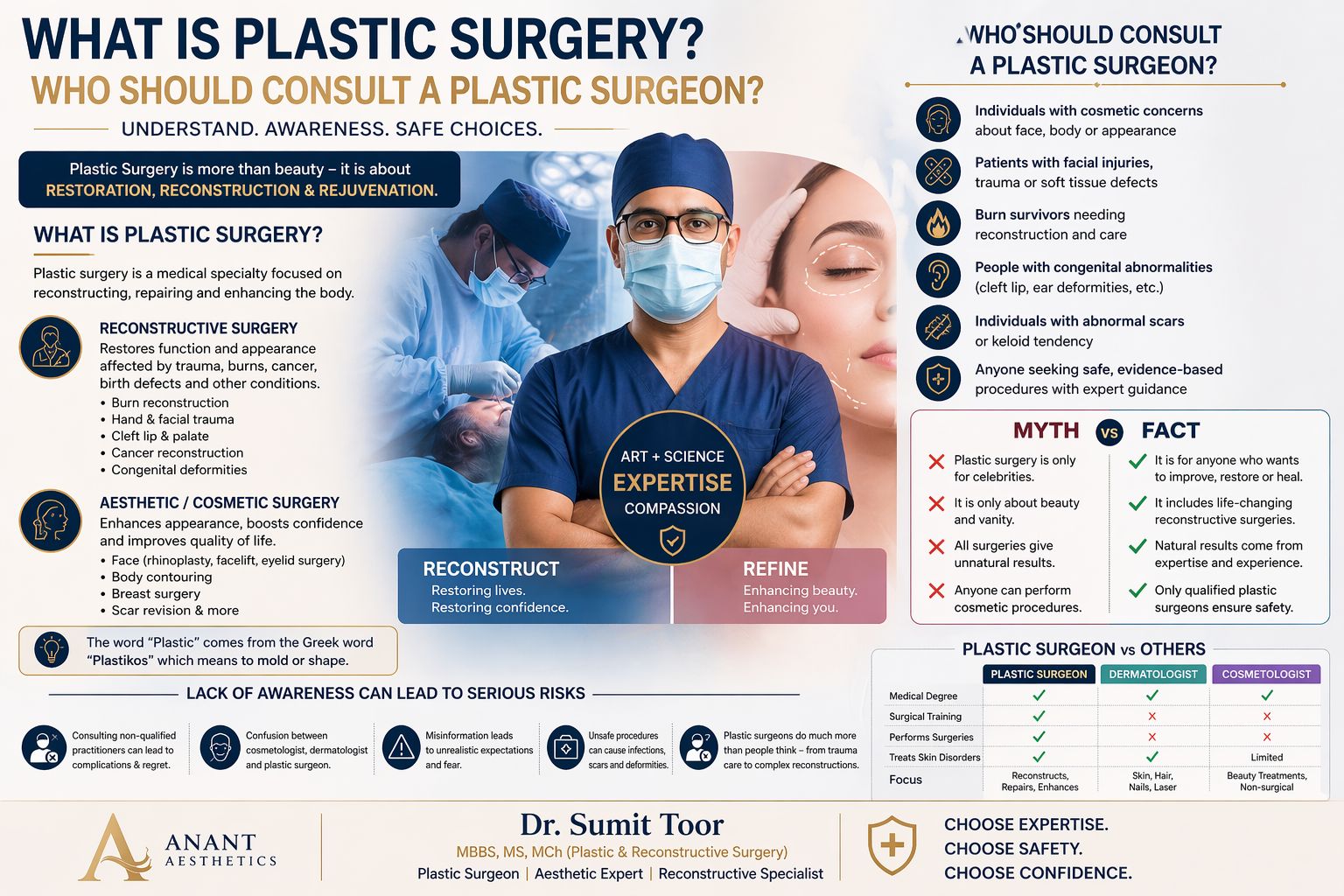
What is Plastic Surgery?
The word "plastic" in plastic surgery does not refer to the synthetic material we use in daily life. It is derived from the Greek word plastikos, which means "to mold" or "to shape." This specialty is dedicated to the molding and reconstruction of human tissue, whether it is to restore a body part to its natural state or to enhance its aesthetic appeal.
Plastic surgery is broadly divided into two main pillars:
- Reconstructive Surgery: This focuses on repairing parts of the body affected by congenital defects, developmental abnormalities, trauma, infection, tumors, or disease. The primary goal is to restore function and a near-normal appearance.
- Cosmetic (Aesthetic) Surgery: This involves procedures aimed at enhancing a person's appearance and increasing their self-confidence by reshaping or adjusting normal body structures.
The Awareness Gap: Myths vs. Reality in India
In India, there is a pressing need for better awareness regarding who plastic surgeons are and what they do. This lack of information often leads patients to consult non-qualified practitioners, which can result in unsafe procedures and poor outcomes.
Common misconceptions include:
- The "Celebrity Only" Myth: Many believe plastic surgery is an exclusive luxury for the elite. In reality, a large portion of our work involves life-changing reconstructive procedures for common people.
- Scope of Practice: Many are unaware that plastic surgeons are the primary specialists for managing severe burns, complex hand injuries, facial fractures, and post-cancer reconstructions.
- The "Unnatural" Fear: Misinformation often leads to the fear that surgery will result in a "plastic" or frozen look. Modern techniques focus on natural-looking results that harmonize with an individual's unique features.
Who Should Consult a Plastic Surgeon?
Knowing when to seek the expertise of a plastic surgeon is crucial for patient safety and optimal results. You should consider a consultation if you fall into any of the following categories:
- Cosmetic Concerns: Individuals seeking to address concerns like the shape of their nose (rhinoplasty), signs of aging (facelifts), body contouring (liposuction or tummy tucks), or scar revision.
- Trauma and Injuries: Patients with facial injuries, deep soft tissue defects, or complex hand injuries.
- Burn Care: Those requiring acute burn management or secondary reconstruction to improve mobility and appearance after a burn injury.
- Congenital Deformities: Children or adults born with conditions such as cleft lip and palate, ear deformities, or birthmarks.
- Abnormal Scarring: Individuals prone to keloids or hypertrophic scars who require specialized management.
Connect with our experts for personalized care:
Plastic Surgeon vs. Others: Why Qualifications Matter
It is common to confuse plastic surgeons with dermatologists or cosmetologists. While there is some overlap in the aesthetic field, the training is vastly different. A board-certified plastic surgeon undergoes years of rigorous surgical residency, mastering the intricacies of anatomy, tissue handling, and complex reconstruction. This surgical expertise is what ensures safety, especially when complications arise or when a procedure requires deep tissue manipulation.
Myth vs. Fact: Setting the Record Straight
- Myth: Plastic surgery leaves no scars.
Fact: Every surgery leaves a scar, but plastic surgeons are experts in placing incisions in hidden areas and using techniques to make scars as inconspicuous as possible. - Myth: Liposuction is a weight-loss procedure.
Fact: Liposuction is for body contouring and removing stubborn fat pockets; it is not a substitute for a healthy diet and exercise. - Myth: Cosmetic surgery is only for women.
Fact: An increasing number of men are seeking procedures like gynecomastia (male breast reduction), hair transplants, and jawline enhancement.
Safety, Ethics, and Realistic Expectations
The foundation of a successful procedure is a combination of a qualified surgeon and a well-informed patient. Ethical practice involves setting realistic expectations. During a consultation, we prioritize individualized treatment planning, ensuring that the patient understands the risks, the recovery process, and the likely outcomes. Safe cosmetic surgery in India is achievable when patients prioritize medical credentials over low-cost marketing.
About Anant Aesthetic Clinic
Anant Aesthetic Clinic, located in Adampur, is a premier destination for those seeking excellence in aesthetic and reconstructive care. The clinic is run by the dedicated team of Dr. Sumit Toor and Dr. Pratibha Toor, who bring together clinical expertise and a patient-centric approach. Whether you are seeking reconstructive surgery or safe, evidence-based cosmetic enhancements, Anant Aesthetic Clinic provides a professional and nurturing environment for your transformation journey.
Dr. Sumit Toor | Anant Aesthetics
Anant Aesthetic Clinic, Adampur