

Introduction
In recent years, the landscape of weight management has undergone a seismic shift. What was once a journey defined solely by rigorous dieting and intense exercise has been transformed by the emergence of highly effective injectable medications. Among these, Ozempic has become a household name, sparking global conversations from Hollywood red carpets to local clinics in India. While its primary purpose was to manage blood sugar, its profound impact on weight loss has made it a sought-after solution for those struggling with obesity.
However, this popularity has brought new aesthetic challenges to the forefront. The term “Ozempic face” has entered the lexicon, describing the hollowed, aged appearance that can sometimes follow rapid weight loss. As more patients seek non-surgical weight loss options to avoid the risks of invasive procedures, understanding the medical and aesthetic implications of GLP-1 weight loss drugs India is more important than ever. This article provides a comprehensive guide for Indian patients considering this medical path.
What is Ozempic?
Ozempic is the brand name for semaglutide, a medication developed by Novo Nordisk. It belongs to a class of drugs known as glucagon-like peptide-1 (GLP-1) receptor agonists. Originally, Ozempic was researched and approved specifically for the treatment of Type 2 diabetes, helping patients regulate their blood glucose levels and reduce the risk of major cardiovascular events.
During clinical trials, researchers noticed a significant secondary effect: substantial weight loss. This led to the development of Wegovy (a higher-dose version of semaglutide specifically for weight loss) and the widespread off-label use of Ozempic for weight management. In the Indian context, while the oral form of semaglutide is widely available, the injectable form has gained immense traction among those looking for a potent medical intervention for obesity.
Mechanism of Action: How It Works in the Body
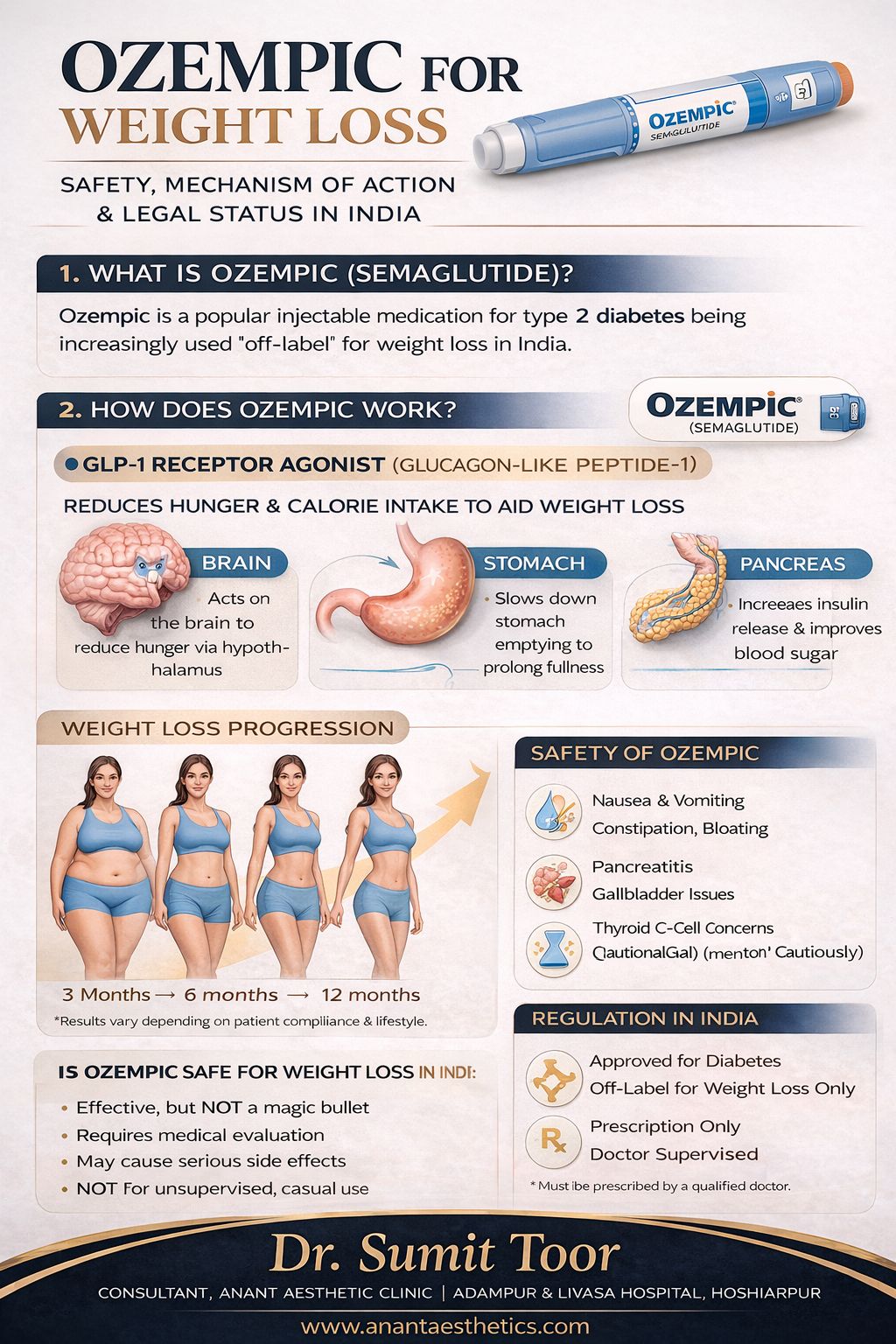
To understand why Ozempic is so effective, we must look at the physiology of hunger. Semaglutide mimics a natural hormone in the body called GLP-1, which is released in the gut after we eat. It works through several key pathways:
- Appetite Suppression via the Hypothalamus: Semaglutide targets the areas of the brain (specifically the hypothalamus) that regulate appetite and food intake. By mimicking GLP-1, it signals to the brain that you are full, significantly reducing cravings and the “food noise” many patients experience.
- Delayed Gastric Emptying: The medication slows down the rate at which the stomach empties its contents into the small intestine. This physical delay keeps you feeling satiated for a much longer period after a meal.
- Improved Insulin Sensitivity: It stimulates the pancreas to release insulin when blood sugar is high and prevents the liver from making too much sugar. This metabolic stabilization helps the body process energy more efficiently.
By combining these effects, Ozempic creates a natural calorie deficit without the intense hunger pangs typically associated with dieting, leading to consistent and sustainable weight loss.
Effects on the Body: Beyond the Scale
When using Ozempic weight loss India protocols, the pattern of weight loss is often rapid. While the primary goal is the reduction of adipose tissue (fat), it is important to note that rapid weight loss can also lead to a reduction in lean muscle mass if not managed with proper protein intake and resistance training.
One of the most discussed side effects is the impact on facial aesthetics. Rapid fat loss doesn't just happen at the waistline; it also occurs in the face. The loss of structural fat pads in the cheeks and temples can lead to skin sagging, deep wrinkles, and a “gaunt” look, popularly known as “Ozempic face.” This is why a holistic approach, involving both medical weight loss and aesthetic maintenance, is essential.
Safety Profile and Common Side Effects
Is semaglutide safe? For most patients, when used under strict medical supervision, the answer is yes. However, like any potent medication, it carries a risk of side effects. Most patients experience mild to moderate gastrointestinal issues, especially during the first few weeks as the dosage is titrated upward.
Ozempic side effects India patients should be aware of include:
- Nausea and vomiting
- Diarrhea or constipation
- Abdominal pain and bloating
- Fatigue
There are also more serious, though rare, risks that require immediate medical attention:
- Pancreatitis: Inflammation of the pancreas.
- Gallbladder Issues: Including gallstones.
- Thyroid C-cell concerns: In animal studies, semaglutide was linked to thyroid tumors. While this hasn't been proven in humans, patients with a personal or family history of Medullary Thyroid Carcinoma (MTC) or Multiple Endocrine Neoplasia syndrome type 2 (MEN 2) are advised against using it.
Is Ozempic Safe for Weight Loss?
The safety of semaglutide for weight loss is backed by extensive clinical trials, such as the STEP (Semaglutide Treatment Effect in People with obesity) program. These studies showed that patients lost significantly more weight compared to those using lifestyle interventions alone. However, the “safety” of the drug is highly dependent on patient selection. It is not a “quick fix” for someone looking to lose five kilograms for a wedding; it is a medical treatment for those with a BMI over 30, or over 27 with weight-related comorbidities like hypertension.
Legal Status in India
The legal landscape for semaglutide in India is specific. The Drug Controller General of India (DCGI) has approved semaglutide for the treatment of Type 2 diabetes. While the oral version (Rybelsus) is widely available in Indian pharmacies, the injectable version (Ozempic) is often imported or prescribed off-label for weight loss.
It is vital to understand that semaglutide is a prescription-only medication. Purchasing it without a valid prescription from a qualified doctor is not only illegal but dangerous. Ethical practice in India dictates that a physician must conduct a thorough screening, including blood tests and a review of medical history, before initiating treatment.
Who Should NOT Take Ozempic?
Certain contraindications make Ozempic unsafe for specific individuals. You should avoid this medication if you have:
- A personal or family history of Medullary Thyroid Carcinoma (MTC).
- Multiple Endocrine Neoplasia syndrome type 2 (MEN 2).
- A history of severe allergic reactions to semaglutide.
- Current pregnancy or plans to become pregnant (the drug should be stopped at least two months before conception).
- A history of pancreatitis.
- Severe kidney disease or active gallbladder disease.
The Role of Aesthetic Clinics in the Ozempic Journey
Weight loss is a victory for your health, but it can sometimes feel like a loss for your appearance. This is where the expertise of an aesthetic clinic becomes invaluable. Managing the “Ozempic face” and body skin laxity requires a proactive, combined approach.
At Anant Aesthetic Clinic, we specialize in restorative treatments that complement your weight loss journey:
- Dermal Fillers: To restore lost volume in the cheeks, temples, and jawline, softening the gaunt appearance.
- Platelet-Rich Fibrin (PRF): To stimulate natural collagen production and improve skin texture and thickness.
- Skin Tightening: Using advanced technologies to address skin laxity on the face and body that often follows rapid fat loss.
Conclusion
Ozempic and other GLP-1 receptor agonists represent a breakthrough in medical science, offering hope to millions struggling with obesity. While the results can be life-changing, the journey must be navigated with caution, medical expertise, and a holistic view of health and beauty. Weight loss is most successful when it is part of a supervised plan that includes nutritional guidance, lifestyle changes, and aesthetic support.
If you are considering medical weight loss, always consult with a qualified healthcare professional to ensure the treatment is safe and appropriate for your unique biological profile.
Dr. Sumit Toor
Consultant at Anant Aesthetic Clinic, Adampur and Livasa Hospital, Hoshiarpur
Anant Aesthetic Clinic, Adampur
Website: www.anantaesthetics.com