

Introduction: Understanding the Conversation Around Semaglutide and Facial Changes
The conversation surrounding medications like semaglutide—marketed under brand names such as Ozempic—frequently extends beyond metabolic health and into the realm of appearance. Among the most popular cultural buzzwords to emerge is “Ozempic face.” While this term dominates social media discussions, it is crucial to separate pop-culture terminology from medical reality. Facial changes associated with weight-loss medications are rarely a direct toxic effect of the drug itself. Instead, they are the natural physical consequence of losing subcutaneous fat and overall body weight.
For patients navigating type 2 diabetes, obesity, and broader metabolic health, medications like semaglutide offer remarkable therapeutic benefits. However, determining whether a medication is appropriate involves much more than reviewing a single lab value like an HbA1c of 7.1%. The central question is never simply whether a medication is good or bad; rather, it is whether the expected metabolic benefits justify the treatment for an individual patient—and whether any weight loss occurring is at a healthy, clinically appropriate level.
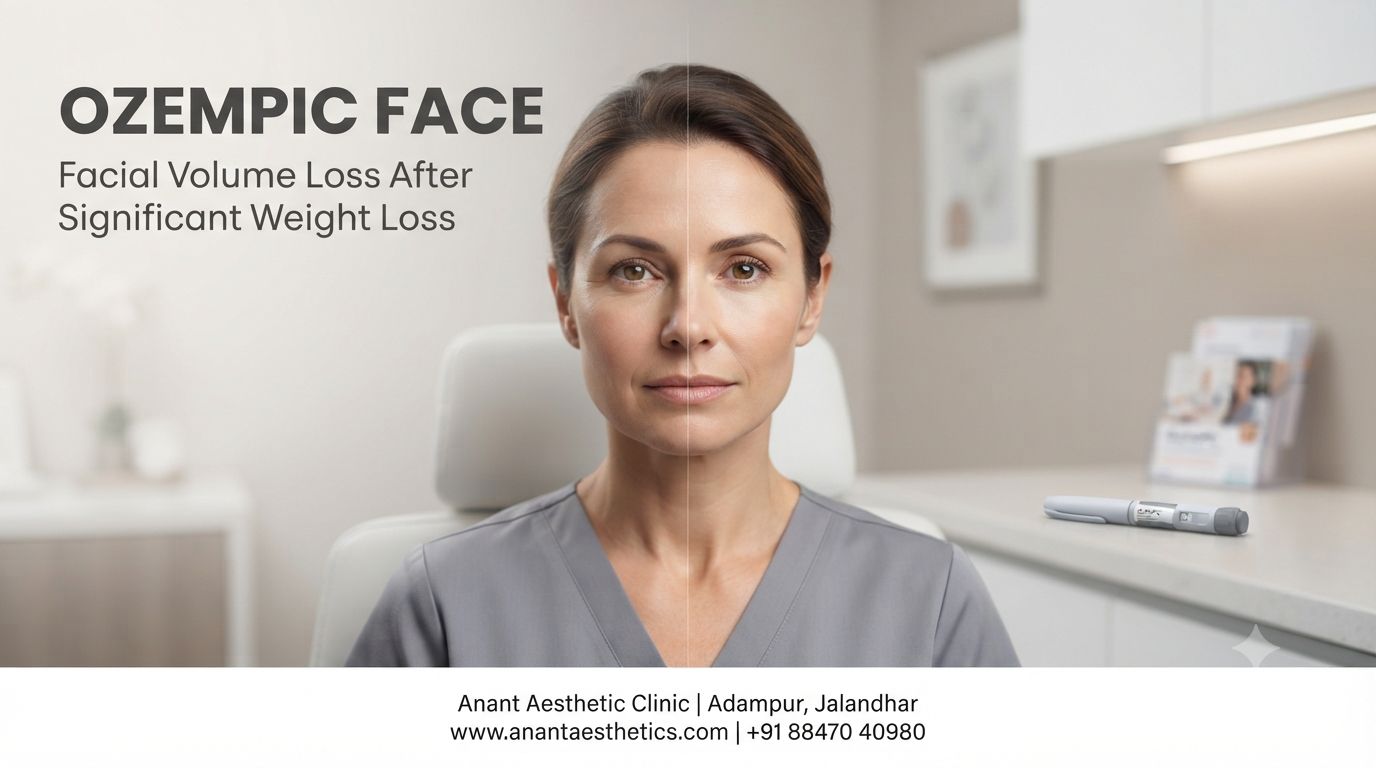
As discussions about semaglutide weight loss grow, patients often search for accurate details regarding semaglutide side effects, rapid weight loss facial changes, and potential Ozempic face treatment options.
Why Does the Face Change After Significant Weight Loss?
To understand why facial appearance shifts during substantial weight reduction, it helps to examine facial anatomy. The face is supported by a complex network of superficial and deep facial fat compartments, cheek and midface volume, temple volume, and periorbital soft tissue located around the eyes. Skin elasticity, driven by collagen and elastin proteins, determines how resiliently the skin adapts to underlying shifts in volume.
With age, natural facial volume loss occurs progressively. When a person experiences significant or rapid weight reduction, subcutaneous fat diminishes throughout these anatomical compartments. This sudden loss of internal structural support can reveal underlying skeletal contours, deepen nasolabial folds, and make pre-existing skin laxity and wrinkles much more noticeable. The severity of these changes varies widely depending on age, genetics, baseline facial fat distribution, smoking status, sun exposure, and nutrition.
It is important to clarify that semaglutide does not directly destroy facial fat cells or accelerate biological aging. Rather, any medication or lifestyle intervention that produces substantial systemic weight loss will naturally affect facial fullness.
Is Semaglutide Automatically Justified When HbA1c is 7.1%?
A frequent clinical dilemma involves patients with type 2 diabetes who maintain an HbA1c of approximately 7.1%. A critical medical question arises: Is starting or escalating semaglutide automatically justified in this scenario?
The answer is nuanced. An HbA1c of 7.1% by itself is not sufficient to dictate whether semaglutide should be initiated or increased. Glycemic targets must always be individualized. While many adults with type 2 diabetes strive for an HbA1c goal below 7%, target thresholds vary depending on age, comorbidities, diabetes duration, hypoglycemia risk, life expectancy, and other individual clinical circumstances.
According to the 2026 American Diabetes Association (ADA) Standards of Care, obesity pharmacotherapy should be considered alongside lifestyle interventions for individuals managing both diabetes and overweight or obesity. The ADA identifies GLP-1 receptor agonists like semaglutide and tirzepatide among preferred high-efficacy options when clinically appropriate. Semaglutide offers proven benefits for glycemic control, body-weight reduction, cardiovascular risk reduction in qualified populations, and broader metabolic health. However, these benefits must be carefully weighed against potential adverse effects, treatment burden, cost, accessibility, nutritional status, and the magnitude of weight loss required.
Conversely, a patient with well-controlled diabetes and a healthy baseline weight does not automatically require semaglutide merely for cosmetic weight loss. Treatment decisions must be tailored by the treating physician rather than dictated by a single laboratory metric.
Avoiding Excess: Why More Weight Loss Is Not Always Better
In modern weight-management culture, there is often an underlying assumption that maximum weight loss is always the ultimate goal. From a clinical perspective, however, more weight loss is not automatically better, especially when it occurs too rapidly.
Excessive or overly rapid weight reduction can lead to unintended consequences, including:
- Significant loss of facial subcutaneous volume: Leading to prominent skeletal contours and deep hollows.
- Nutritional inadequacy and micronutrient deficiencies: Caused by reduced caloric intake without adequate dietary balance.
- Reduced muscle mass and an elevated risk of sarcopenia: Especially hazardous in older adults and individuals lacking resistance training.
- Increased prominence of loose skin and structural hollowing: Where skin elasticity cannot adapt to the rapid volume drop.
To mitigate these risks, clinicians emphasize adequate daily protein intake and resistance exercise when clinically appropriate. Regular monitoring of body weight, body composition, nutritional status, and functional capacity is vital throughout any substantial weight-management journey.
Can Ozempic Face Be Treated? Evidence-Based Approaches
For patients concerned about facial hollowing or skin laxity following weight reduction, several evidence-based strategies can help restore a refreshed appearance. Professional intervention should always be individualized following a comprehensive assessment by a qualified medical professional.
It is vital to understand that cosmetic treatments are not universally required for everyone taking semaglutide. Interventions should be tailored strictly to individual anatomical needs.
Semaglutide Is a Medical Treatment — Not a Cosmetic Shortcut
GLP-1 receptor agonists are powerful prescription medications designed to manage chronic medical conditions like type 2 diabetes and obesity. They should not be vilified simply because systemic weight loss alters facial appearance. At the same time, using powerful metabolic medications solely for minor cosmetic weight loss—particularly in individuals without obesity or a clear medical indication—requires careful evaluation of the risk-benefit balance.
Medications like semaglutide require medical supervision, ongoing evaluation, and a clear therapeutic purpose. They are designed to improve long-term health outcomes, not to serve as quick-fix beauty solutions.
Frequently Asked Questions
1. What exactly is “Ozempic face”?
2. Does Ozempic directly cause facial aging?
3. Why does the face become hollow after rapid weight loss?
4. Can Ozempic face be reversed?
5. Does everyone taking semaglutide develop facial changes?
6. Is semaglutide appropriate when HbA1c is 7.1%?
7. Can semaglutide be used when diabetes is already well controlled?
8. Is semaglutide appropriate for cosmetic weight loss?
9. Can fillers or fat grafting restore lost facial volume?
10. What should patients discuss with their physician before starting or increasing semaglutide?
Key Takeaways
- “Ozempic face” is a popular cultural term for facial volume loss caused by systemic weight reduction, not direct drug toxicity.
- An HbA1c of 7.1% requires personalized clinical evaluation rather than an automatic medication change.
- The 2026 American Diabetes Association Standards of Care emphasize individualized treatment plans that balance metabolic benefits against potential side effects and treatment burden.
- Rapid or excessive weight loss can lead to loss of lean muscle mass and nutritional gaps; balanced nutrition and resistance training are encouraged.
- Facial volume changes can be addressed through various non-surgical and surgical options tailored to the individual.
- Medication decisions should always be made in consultation with a qualified healthcare provider, never out of concern for facial appearance alone.
References and Sources
- American Diabetes Association. (2026). Standards of Care in Diabetes—2026. Diabetes Care.
- Peer-reviewed endocrinology and metabolic literature regarding GLP-1 receptor agonist efficacy and safety profiles.
- Clinical guidelines on facial anatomy, soft-tissue volume loss, and aesthetic restoration protocols.