

Introduction
Pilonidal disease is a chronic, often debilitating condition characterized by the formation of cysts or abscesses in the sacrococcygeal region. Despite advancements in surgical techniques, recurrence remains a significant clinical challenge, often frustrating both surgeons and patients. The primary pathogenic factor identified in the development and recurrence of pilonidal disease is the presence of hair. This article explores the evidence-based role of laser hair reduction (LHR) as a critical adjunct to surgical management in minimizing recurrence and optimizing long-term outcomes.
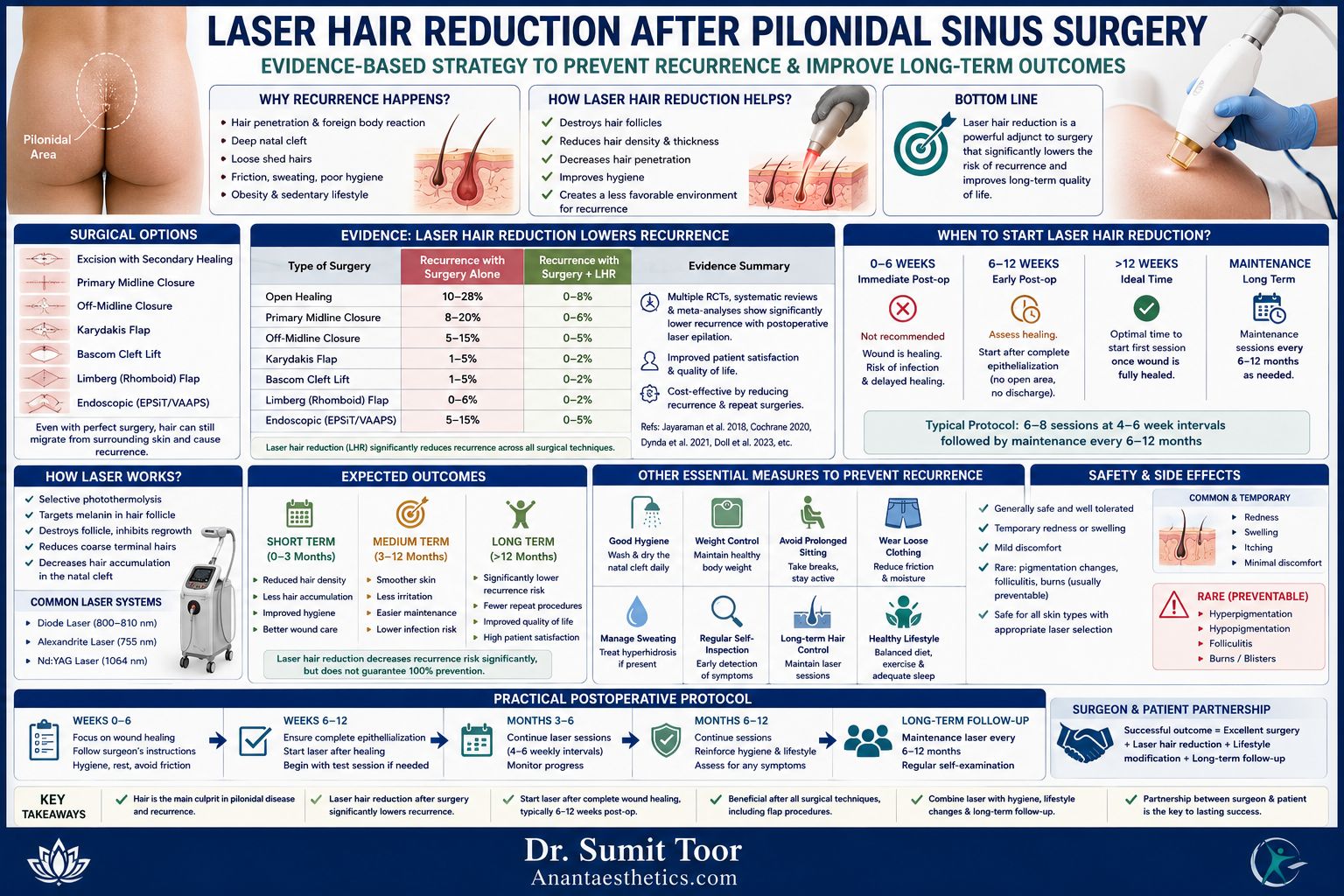
The pathophysiology of pilonidal disease centers on the 'hair penetration theory.' Loose, shed hairs from the back or buttocks are trapped by friction and moisture within the natal cleft. These hairs act as foreign bodies, penetrating the skin and triggering a chronic inflammatory response, which leads to sinus formation. Even after successful surgical excision, the anatomical predisposition—specifically a deep natal cleft—and the continued presence of hair in the surrounding area create a high-risk environment for recurrence.
Surgical Management and the Role of Hair
Surgical approaches range from simple excision with secondary healing to complex flap reconstructions like the Karydakis, Bascom cleft lift, or Limberg flap. While these procedures aim to flatten the natal cleft and remove diseased tissue, they do not address the underlying issue of hair shedding. Even with a perfectly executed flap, hair can migrate into the surgical site, potentially initiating a new inflammatory cycle. This is why surgical success must be supported by long-term hair management.
Connect with Anant Aesthetic Clinic
Evidence Supporting Laser Hair Reduction
Clinical evidence consistently demonstrates that LHR significantly reduces recurrence rates. By utilizing selective photothermolysis, laser systems (such as Diode, Alexandrite, or Nd:YAG) target the melanin in hair follicles, effectively destroying them and reducing hair density. Systematic reviews have shown that patients who undergo LHR post-surgery experience lower recurrence rates compared to those who rely on surgery alone. This benefit persists even after flap procedures, as the laser treatment prevents new hair from migrating into the sensitive intergluteal region.
Timing and Practical Protocol
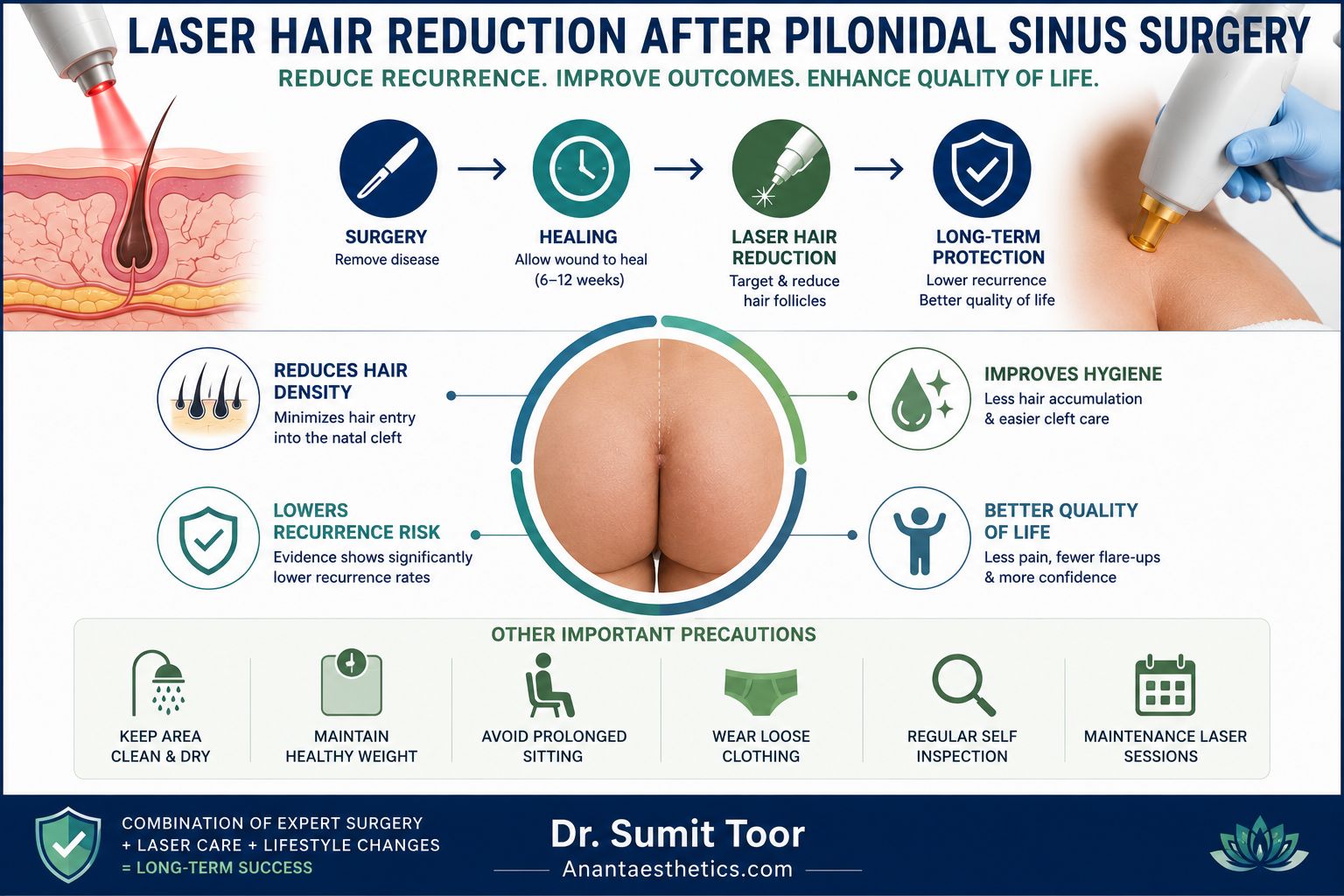
Initiating LHR requires careful consideration of the healing process. Treatment is generally avoided in the immediate postoperative period. Most experts recommend starting sessions once the surgical site has achieved complete epithelialization, typically between 6 to 12 weeks post-surgery. A consistent schedule of sessions is necessary to achieve long-term hair reduction, followed by periodic maintenance treatments.
Comprehensive Prevention Strategies
Beyond laser treatment, long-term success requires a holistic approach:
- Hygiene: Regular cleansing and drying of the natal cleft to reduce moisture.
- Weight Management: Reducing friction and skin-on-skin contact.
- Lifestyle: Avoiding prolonged sitting and wearing breathable clothing.
- Self-Inspection: Early detection of any new hair accumulation or skin changes.
About Anant Aesthetic Clinic
Anant Aesthetic Clinic, located in Adampur, is a premier destination for advanced aesthetic and dermatological care. The clinic is expertly managed by Dr. Sumit Toor and Dr. Pratibha Toor, who are dedicated to providing evidence-based, patient-centered treatments. With a focus on precision and long-term wellness, the team at Anant Aesthetic Clinic utilizes state-of-the-art technology to ensure optimal outcomes for patients suffering from complex conditions like pilonidal disease.
Key Takeaways
- Hair is the primary driver of pilonidal disease recurrence.
- Laser hair reduction is a proven, evidence-based adjunct to surgery.
- LHR remains effective even after flap reconstruction.
- Optimal results require a combination of surgery, laser epilation, and diligent hygiene.
- Consult with specialists like Dr. Sumit Toor and Dr. Pratibha Toor at Anant Aesthetic Clinic to develop a personalized postoperative plan.