

Introduction
In the evolving landscape of perioperative care, nutritional optimization has emerged as a cornerstone for achieving superior outcomes in plastic and aesthetic surgery. β-hydroxy β-methylbutyrate (HMB), a bioactive metabolite of the essential branched-chain amino acid leucine, plays a pivotal role in this paradigm. While only about 5% of dietary leucine is naturally converted to HMB in the body, its concentrated supplementation via advanced formulations like HMB-Max has shown significant promise in preserving lean muscle mass and accelerating tissue repair.
For patients undergoing invasive procedures such as body contouring or extensive reconstructive surgery, the body often enters a catabolic state. HMB-Max serves as a nutritional intervention designed to mitigate this stress, supporting wound healing, muscle preservation, and a faster return to daily activities.
Molecular Structure and Physiology
HMB is biochemically derived from the transamination of leucine to α-ketoisocaproate (α-KIC), which is then partitioned into HMB by the enzyme α-KIC dioxygenase. Within the human body, HMB acts as a signaling molecule that regulates protein turnover. Unlike its precursor leucine, which primarily stimulates protein synthesis, HMB is uniquely potent in its ability to simultaneously inhibit protein degradation, making it a dual-action agent in skeletal muscle metabolism.
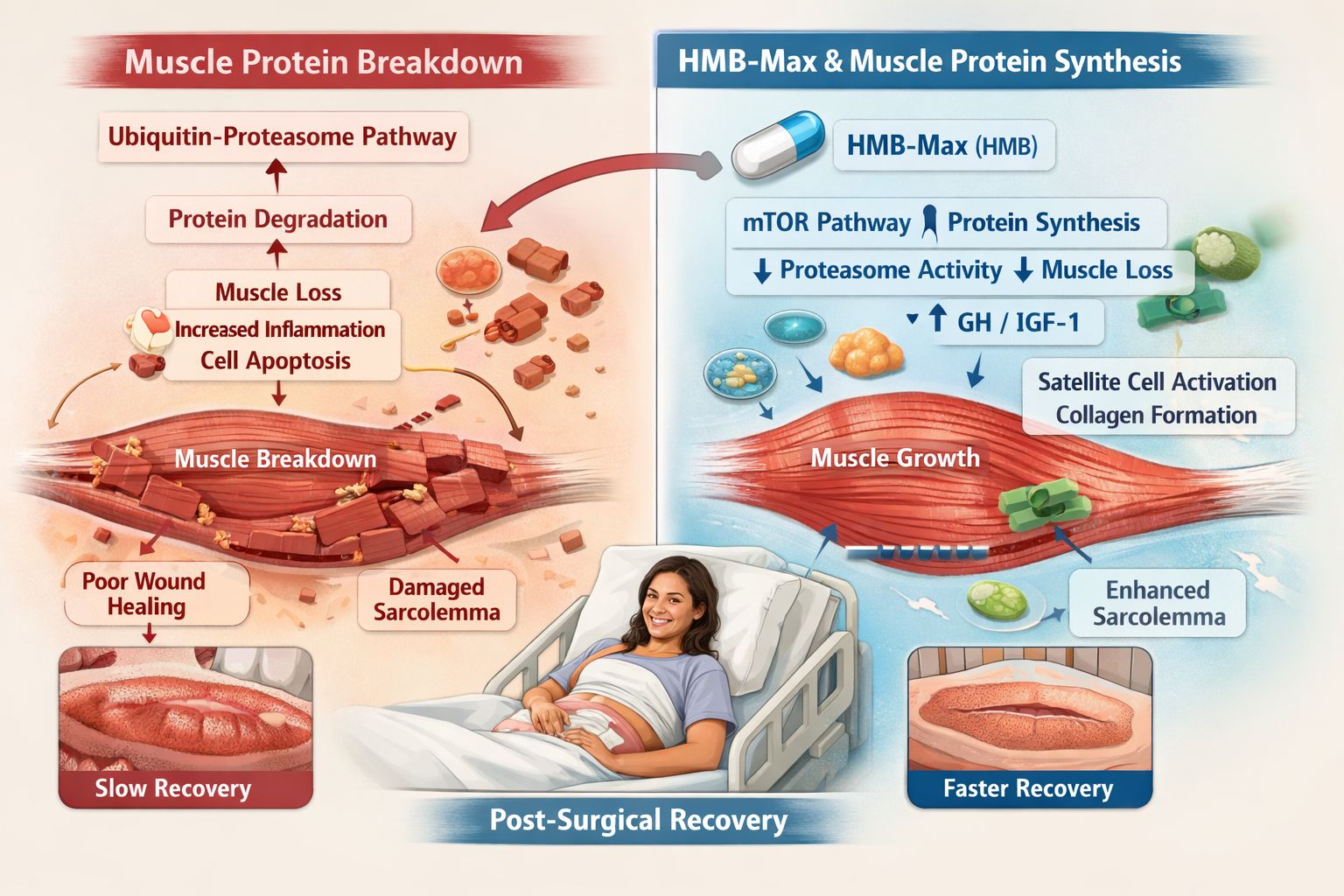
Mechanism of Action: The Cellular Foundation of Recovery
The clinical efficacy of HMB-Max is rooted in several sophisticated intracellular pathways that govern how the body responds to surgical trauma:
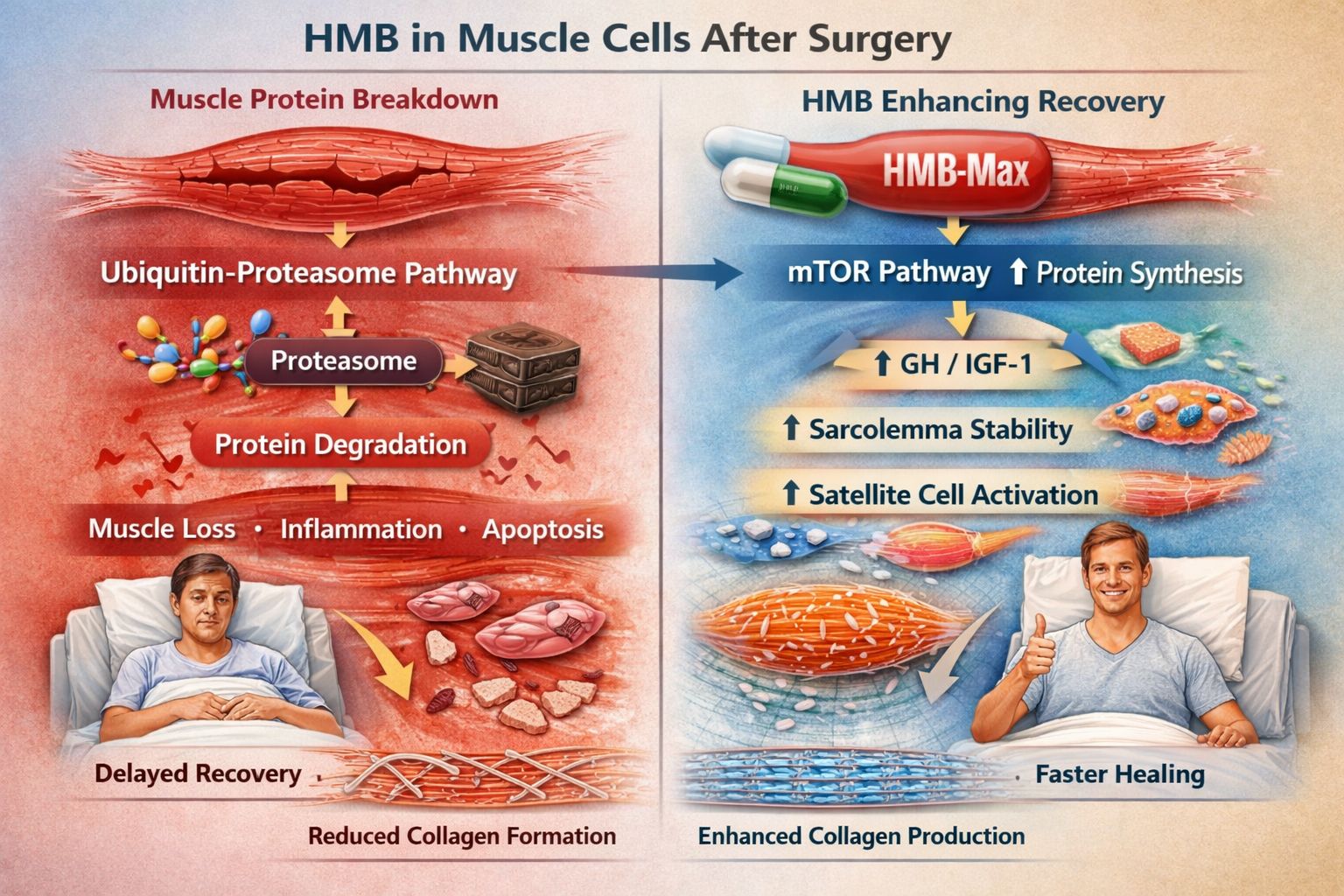
- Activation of the mTOR Pathway: HMB stimulates the Mammalian Target of Rapamycin (mTOR), a central regulator of cell growth. This activation increases the rate of protein synthesis, providing the building blocks necessary for tissue regeneration.
- Inhibition of the Ubiquitin–Proteasome Pathway: Surgery triggers the breakdown of muscle proteins. HMB inhibits the enzymatic machinery responsible for this degradation, effectively acting as a "brake" on muscle wasting.
- Enhancement of the GH/IGF-1 Axis: HMB has been shown to upregulate the Growth Hormone and Insulin-like Growth Factor-1 axis, further promoting an anabolic environment conducive to healing.
- Sarcolemma Integrity: HMB contributes to the synthesis of cholesterol in muscle cells, which is vital for stabilizing the sarcolemma (muscle cell membrane) and preventing cell damage during physical stress.
- Satellite Cell Proliferation: By promoting the activity of myogenic stem cells (satellite cells), HMB aids in the repair and growth of muscle fibers following the inflammatory phase of surgery.
Role in Plastic Surgery and Aesthetic Practice
The application of HMB-Max extends across various surgical domains, offering specific benefits for aesthetic patients:
- Post-Operative Recovery: In procedures like abdominoplasty and high-definition liposuction, HMB helps maintain the underlying muscle definition that patients work hard to achieve.
- Wound Healing and Collagen Remodeling: By supporting protein synthesis, HMB facilitates the production of collagen, which is essential for strong, well-healed incisions and reduced scarring.
- Sarcopenia Management: For elderly patients or those with age-related muscle loss (sarcopenia), HMB-Max provides a safety net, reducing the risk of post-surgical frailty and complications.
- Reduced Fatigue: By minimizing muscle catabolism, patients often report lower levels of post-operative fatigue, allowing for earlier mobilization.
Evidence from Clinical Studies
Current literature highlights HMB as a robust nutritional adjunct. While much of the early data originated from sports nutrition and athletic performance, recent clinical trials have focused on medical populations. Studies indicate that HMB can effectively attenuate muscle loss in bedbound patients and those recovering from major trauma. In the context of aesthetic surgery, evidence is evolving; while large-scale randomized controlled trials (RCTs) specifically for cosmetic procedures are still limited, the physiological benefits observed in general surgical populations are highly translatable. Experts emphasize that while HMB is not a substitute for surgical skill, it significantly optimizes the biological "soil" in which the surgery is performed.
Dosage and Administration
To achieve therapeutic levels, the following protocol is generally recommended:
- Standard Dose: 3 grams per day, typically divided into two or three doses to maintain steady plasma levels.
- Preoperative Loading: Commencing supplementation 1–2 weeks prior to surgery can prime the body for the upcoming metabolic stress.
- Postoperative Continuation: Maintaining the regimen for 2–4 weeks post-surgery supports the critical phases of tissue remodeling.
- Forms: HMB is available as Calcium HMB (the most common powder/capsule form) and HMB Free Acid (HMB-FA), which may offer faster absorption.
Safety and Side Effects
HMB has an excellent safety profile and is generally well-tolerated by most patients. Reported side effects are rare and typically limited to mild gastrointestinal discomfort. However, as with any supplement, caution is advised for pregnant or lactating women due to a lack of specific safety data in these groups. Patients with significant renal or hepatic comorbidities should consult their physician before beginning a high-protein or amino-acid-based regimen.
Comparison with Other Nutritional Adjuncts
While protein powders provide the essential building blocks, HMB acts more as a metabolic regulator. Compared to glutamine or arginine, which focus heavily on immune function and blood flow, HMB is more specific to muscle preservation. In many Enhanced Recovery After Surgery (ERAS) protocols, HMB is used synergistically with these other nutrients to provide a comprehensive recovery environment.
Practical Clinical Protocol
For aesthetic clinics looking to integrate HMB-Max, a structured approach is recommended:
- Patient Selection: Prioritize patients undergoing major body contouring, those over age 50, or patients with a low baseline protein intake.
- Integration: Include HMB-Max as part of a "Recovery Kit" provided during the preoperative consultation.
- Monitoring: Track recovery milestones, such as the time to independent mobility and wound closure rates, to assess the impact of the protocol.
Conclusion
HMB-Max represents a significant advancement in evidence-based perioperative nutrition for the plastic surgery patient. By targeting the molecular pathways of muscle preservation and protein synthesis, it offers a proactive way to enhance surgical outcomes and patient satisfaction. While it remains an adjunct to proper surgical technique and overall nutrition, its role in the future of aesthetic medicine is promising.
Anant Aesthetic Clinic, Adampur