

Undergoing a hair restoration procedure, such as Follicular Unit Extraction (FUE) or Follicular Unit Transplantation (FUT), is a significant step toward regaining confidence and a youthful appearance. While these procedures are minimally invasive and highly successful, the recovery phase involves natural physiological responses. One of the most common concerns patients voice in the days following surgery is the appearance of facial swelling, medically known as post-operative oedema.
It is important to understand that swelling after hair transplant is not a sign of a failed procedure or an infection. Rather, it is a standard part of the healing process. In most patients, this swelling is temporary, self-limiting, and can be effectively managed with simple home-care strategies and professional guidance. This guide provides an in-depth look at why swelling occurs, how it progresses, and the evidence-based methods used to minimize its impact on your daily life.
Why Does Facial Oedema Occur After Hair Transplant?
According to clinical studies, facial swelling occurs in a significant percentage of hair transplant patients, typically ranging from 20% to 50% depending on the extent of the procedure. To understand why this happens, we must look at the mechanics of the surgery itself.
During both FUE and FUT procedures, surgeons use a "tumescent solution." This is a specialized mixture of saline (salt water), a local anesthetic (like lidocaine), and adrenaline. This fluid is injected into the scalp to lift the skin away from the underlying skull, create a firm working surface, and minimize bleeding. While this solution is vital for a safe and precise surgery, the body must eventually process and eliminate this extra fluid.
The primary cause of facial swelling is the migration of this tumescent fluid. Because of gravity, the fluid naturally moves downward from the top of the head toward the forehead and face. Additionally, the thousands of micro-incisions made during the grafting process trigger a localized inflammatory response. The body sends white blood cells and extra plasma to the area to begin the repair process, which further contributes to the accumulation of fluid in the soft tissues of the face.
The Timeline of Swelling: What to Expect
Understanding the typical progression of oedema can significantly reduce patient anxiety. While every individual heals at a different rate, the following timeline is observed in most patients:
- Day 1–2: Immediately after surgery, swelling is usually minimal and confined to the donor or recipient areas on the scalp. You may feel a sense of tightness, but your facial features will likely remain unchanged.
- Day 2–4: This is when the fluid begins its descent. You will likely notice forehead swelling after FUE or FUT. The forehead may appear slightly "puffy" or shiny.
- Day 3–5: This is often the peak of the swelling. As the fluid continues to move downward, it may settle around the bridge of the nose and the eyelids. In some cases, this can cause the eyelids to appear heavy or partially closed. While this can look alarming in the mirror, it is usually painless and does not affect vision.
- Day 5–7: The lymphatic system begins to efficiently drain the excess fluid. You will notice the swelling rapidly receding, usually disappearing entirely by the end of the first week.
Proven Methods to Reduce Swelling
Managing how to reduce oedema after hair transplant involves a combination of physical positioning, temperature control, and lifestyle adjustments. Following these evidence-based steps can significantly shorten the duration of the swelling.
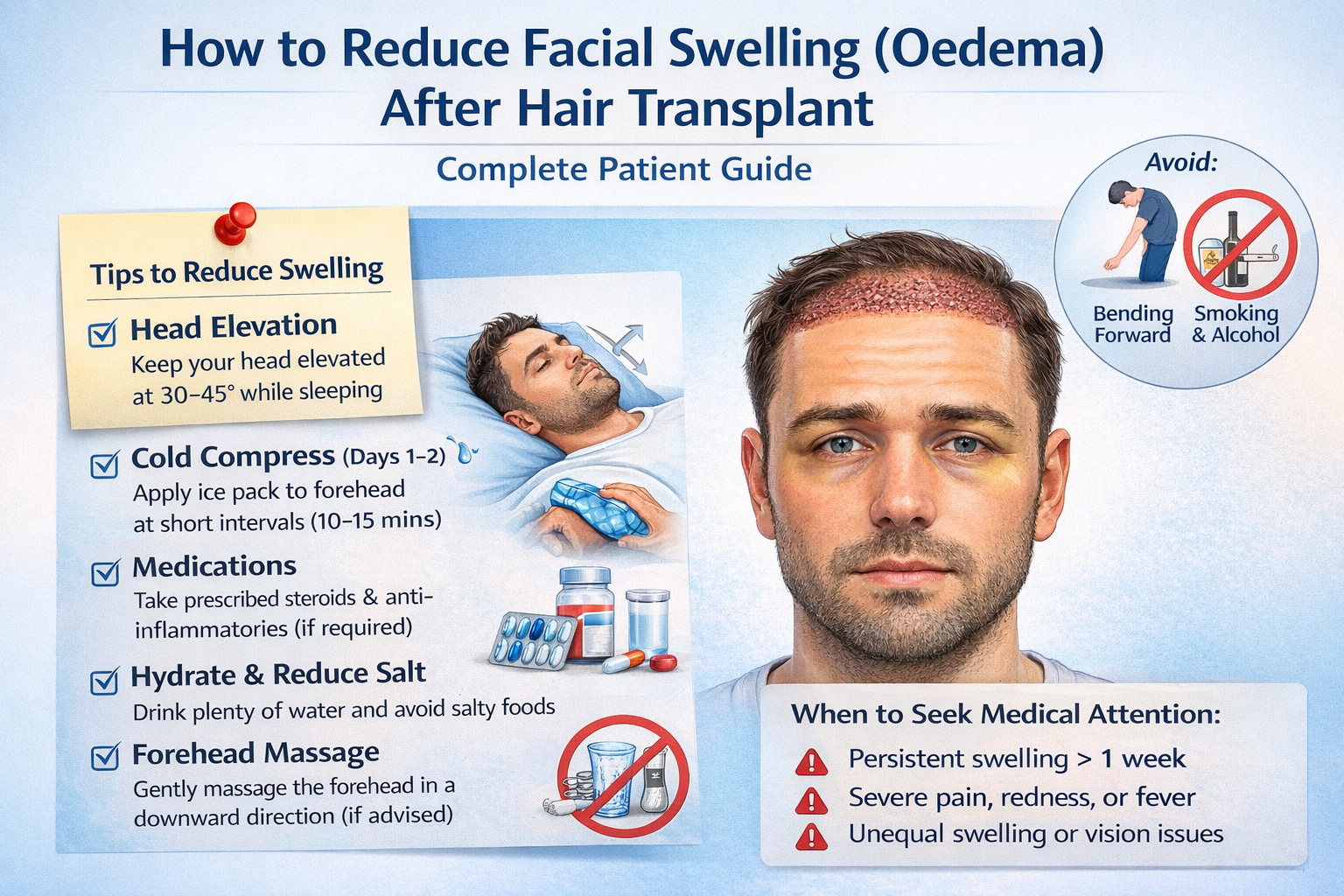
1. Strategic Head Elevation
Gravity is the biggest factor in facial swelling. To prevent fluid from pooling in your face, it is essential to keep your head elevated above the level of your heart, especially during sleep. For the first 3 to 5 nights, sleep at a 30–45 degree angle. Using two or three firm pillows or a reclining chair is highly recommended. This encourages the fluid to drain toward the back of the head or into the lymphatic system rather than settling in the forehead and eyes.
2. Cold Compression (Early Phase)
Applying cold packs can help constrict blood vessels and reduce the inflammatory response. However, caution is paramount: never apply a cold pack directly to the newly transplanted grafts, as this can damage the follicles. Instead, apply the cold compress to your forehead or around the eyes for 10–15 minutes every few hours during the first 48 hours. This is most effective when started immediately after the procedure.
3. Hydration and Dietary Choices
It may seem counterintuitive to drink more water when your body is retaining fluid, but hydration is key. Drinking plenty of water helps your kidneys flush out the saline and medications used during surgery. Conversely, you should strictly avoid high-sodium (salty) foods for the first week. Salt causes the body to retain water, which can significantly worsen facial puffiness.
4. Medications
In many clinical protocols, surgeons prescribe a short course of oral corticosteroids (such as Prednisone) to proactively manage inflammation. If your surgeon has provided these, ensure you take them exactly as directed. Over-the-counter anti-inflammatories may also be recommended, but always consult your surgical team before taking any medication, as some (like aspirin) can increase the risk of bleeding.
5. Gentle Forehead Massage
If your surgeon approves, a very gentle massage can help redirect the fluid. Using the pads of your fingers, start at the center of the forehead and move outward toward the temples and then down toward the ears. This follows the natural path of lymphatic drainage. Again, ensure you stay well away from the recipient area where the grafts are located.
The Role of Surgical Technique
From an expert perspective, the severity of post-operative oedema is often linked to the surgical technique employed. Experienced surgeons use several strategies to minimize this side effect:
- Optimized Tumescent Volume: Using the minimum amount of fluid necessary to achieve anesthesia and skin turgor reduces the total volume the body must process.
- Adrenaline Concentration: Proper use of adrenaline helps constrict local blood vessels, which limits the spread of the tumescent fluid.
- Infiltration Planes: Injecting the fluid into specific anatomical planes can help control where the fluid migrates.
When to Worry: Identifying Red Flags
While swelling is normal, patients should be aware of "red flags" that indicate a need for medical attention. Contact your clinic if you experience:
- Swelling that persists or worsens after 7–10 days.
- Severe pain that is not managed by prescribed medication.
- Extreme redness, heat, or pus-like discharge at the graft site (signs of infection).
- Fever or chills.
- Sudden, unequal swelling or any changes in your actual vision (not just eyelid puffiness).
Prevention Tips: Pre-Procedure Advice
Preparation begins before you even enter the operating room. To minimize swelling, avoid alcohol and smoking for at least a week before surgery, as these can impair circulation and healing. Some surgeons may also start a low-dose steroid protocol a day before the procedure for patients prone to inflammation. Finally, ensure you have a "recovery station" set up at home with extra pillows and easy access to water and healthy, low-sodium meals.
Frequently Asked Questions (FAQs)
Is facial swelling normal after hair transplant?
Yes, it is a very common and expected side effect caused by the migration of surgical fluids and the body's natural inflammatory response to the procedure.
How long does forehead swelling last?
In most patients, forehead swelling begins around Day 2 and typically resolves by Day 5 to 7.
Can swelling affect my eyes?
Yes, as fluid moves downward due to gravity, it often settles in the eyelids. This can cause temporary puffiness but does not damage the eyes or affect long-term vision.
Should I take medicines to reduce swelling?
You should only take medications prescribed or approved by your surgeon. Many clinics provide anti-inflammatory drugs or steroids specifically to manage this issue.
Does swelling affect the growth of the new hair?
No. Facial swelling occurs in the soft tissues of the face and does not impact the health or the eventual growth of the transplanted hair follicles on the scalp.
Can I exercise to "sweat out" the swelling?
No. Heavy exercise increases blood pressure and can actually worsen swelling or cause bleeding at the graft sites. Avoid strenuous activity for at least 10–14 days.
Conclusion
Facial swelling after a hair transplant can be a surprising part of the recovery process, but it is a temporary hurdle on the path to a full head of hair. By following the elevation, hydration, and medication protocols provided by your surgical team, you can ensure a smooth and comfortable recovery. Remember, patience is key—the puffiness you see today will soon give way to the permanent, natural results you desire.
Consult an experienced hair transplant surgeon for personalized post-procedure care.
About the Author:
Dr. Sumit Toor, Consultant – Hair Transplant & Aesthetic Surgery
Anant Aesthetics, Adampur
Website: www.anantaesthetics.com
Anant Aesthetic Clinic, Adampur
Disclaimer: This article is for informational purposes and does not replace medical consultation.