

The Rising Popularity and the Hidden Dangers of Hair Restoration
Hair transplant surgery has become one of the most sought-after aesthetic procedures globally, offering a permanent solution to hair loss and a significant boost in self-confidence. However, this surge in popularity has led to a concerning trend: the proliferation of unregulated "black market" clinics. These establishments often lure patients with the promise of low-cost procedures, but behind the discounted prices lies a significant risk to patient safety and aesthetic outcomes.
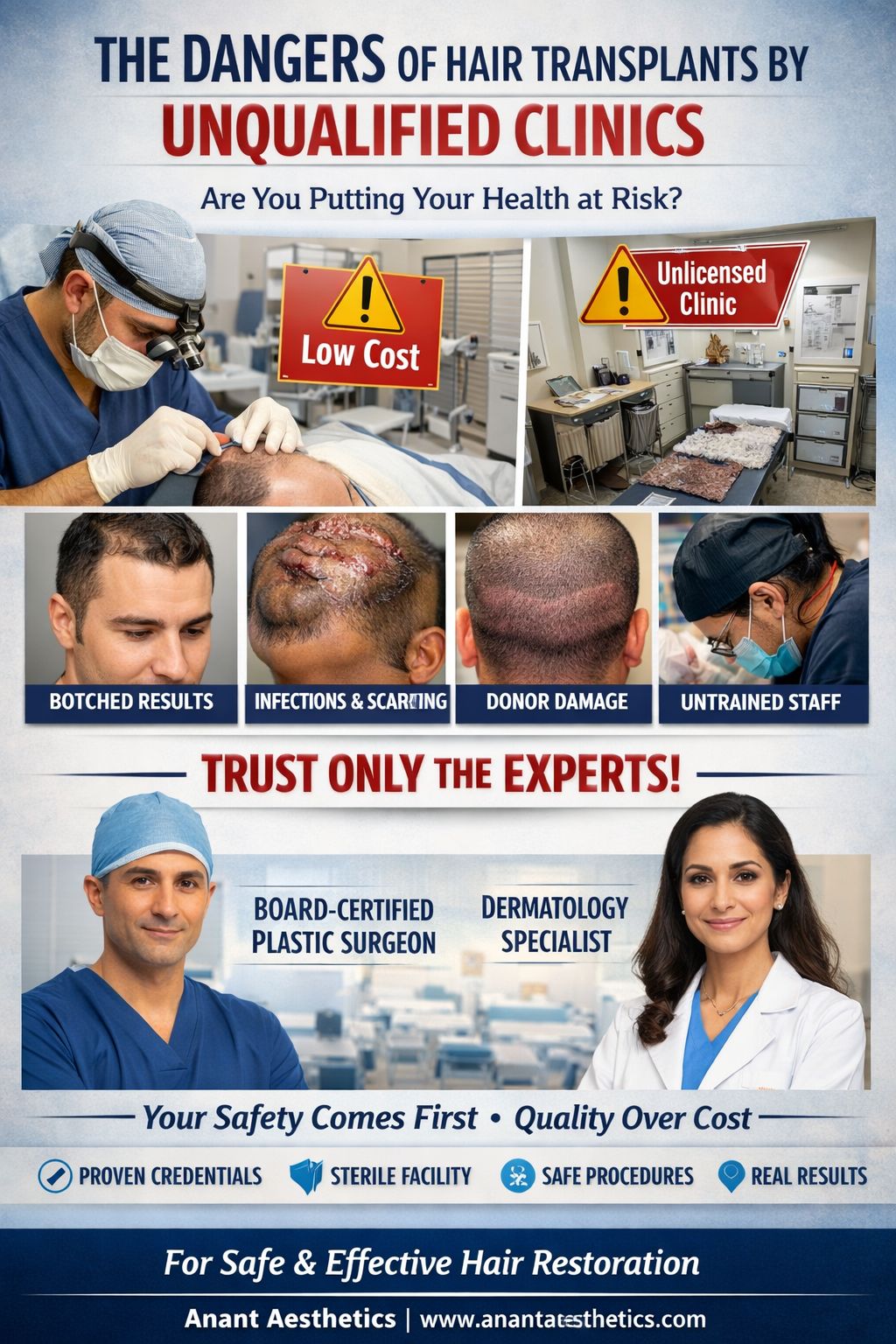
In many regions, particularly in India, there is a prevailing mindset that medical procedures should be sought at the lowest possible price. While being cost-conscious is understandable, compromising on medical expertise in a surgical procedure can lead to devastating, lifelong consequences. Choosing a clinic based solely on price often means sacrificing the quality of care, the sterility of the environment, and the skill of the practitioner.
Who is Qualified to Perform Hair Transplants?
A hair transplant is not merely a cosmetic enhancement; it is a surgical procedure that requires a deep understanding of anatomy, tissue handling, and aesthetic design. To ensure safety and natural results, the procedure should only be performed by qualified medical specialists, specifically:
- Board-Certified Plastic Surgeons: These experts have extensive surgical training and a specialized understanding of tissue viability and reconstructive techniques.
- Dermatologists with Hair Restoration Expertise: Dermatologists are specialists in skin and hair health, making them uniquely qualified to diagnose the underlying causes of hair loss and manage the surgical aspects of restoration.
Entrusting your scalp to a technician or a general practitioner without specialized training significantly increases the likelihood of surgical errors.
Common Risks in Unqualified Clinics
Unregulated clinics often cut corners to maintain low prices, leading to several common issues:
- Poor Graft Survival: If hair follicles are handled roughly or kept out of the body for too long, they will die before they can take root, resulting in thin, patchy growth.
- Unnatural Hairline Design: Creating a natural-looking hairline is an art. Unqualified practitioners often create straight, "pluggy," or overly low hairlines that look artificial.
- Infection and Poor Hygiene: Without strict aseptic techniques and a sterile clinical environment, patients face a high risk of bacterial infections.
- Overharvesting: This occurs when too many grafts are taken from the donor area (the back of the head), leaving it looking thin, scarred, and "moth-eaten."
- Scarring and Disfigurement: Improper extraction and implantation techniques can lead to permanent scarring that is difficult to hide or repair.
- Use of Untrained Technicians: In many low-cost clinics, the doctor is only present for the initial consultation, leaving critical surgical steps to technicians who lack medical degrees.
Medical and Ethical Concerns
Beyond the physical risks, unqualified clinics often operate with a lack of ethical standards. This includes a failure to obtain proper informed consent, where patients are not fully briefed on the potential risks and limitations of the surgery. Furthermore, these clinics may skip the essential pre-operative evaluation, failing to check if a patient is a suitable candidate or if they have underlying health conditions that could complicate the surgery. Unethical marketing, such as using photoshopped "before and after" images, is also a common tactic used to deceive vulnerable patients.
Serious Complications to Watch For
When a hair transplant goes wrong, the complications can be severe and sometimes irreversible:
- Necrosis: Death of the skin tissue in the recipient or donor area due to poor blood supply or trauma.
- Cobblestoning: A bumpy, uneven skin texture caused by grafts being placed too superficially.
- Shock Loss: Permanent loss of existing hair due to excessive trauma during the procedure.
- Chronic Folliculitis: Long-term inflammation and infection of the hair follicles.
How to Identify a Safe and Qualified Clinic
Before booking a procedure, use this checklist to ensure your safety:
- Credentials: Is the lead surgeon a board-certified Plastic Surgeon or Dermatologist?
- Clinical Setup: Is the procedure performed in a dedicated, sterile surgical suite?
- Sterilization: Does the clinic follow international protocols for instrument sterilization?
- Evidence of Results: Can they show consistent, high-quality before-and-after photos of their own patients?
- Patient Reviews: Are there genuine testimonials from previous patients regarding their experience and safety?
Why Expertise Matters More Than Cost
The "savings" offered by unqualified clinics are often an illusion. If a procedure is botched, the cost of corrective surgery is significantly higher than the initial price of a quality transplant. In some cases, the damage is so severe that it cannot be fully repaired. Investing in a qualified specialist ensures that the procedure is done right the first time, protecting both your health and your appearance.
The Role of Regulatory Bodies
Patients must be proactive in their own safety. Regulatory bodies and medical associations provide guidelines to maintain high standards in hair restoration. By choosing certified professionals, you support a medical environment that prioritizes patient welfare over profit margins.
Frequently Asked Questions (FAQs)
- Who is the best person to perform a hair transplant? A board-certified Plastic Surgeon or a Dermatologist with specific training in hair restoration.
- Why are some clinics so much cheaper than others? Low-cost clinics often use untrained technicians, skip sterilization protocols, and lack the overhead of a properly equipped medical facility.
- What is donor area overharvesting? It is the excessive removal of hair from the back of the head, which can lead to permanent thinning and visible scarring.
- Can a bad hair transplant be fixed? While some cases can be improved with repair surgery, severe scarring or total loss of donor hair may be permanent.
- What does "cobblestoning" look like? It appears as small, raised bumps at the base of the transplanted hairs, giving the skin an uneven, "cobbled" appearance.
- Is a hair transplant considered major surgery? It is a minimally invasive surgical procedure, but it still requires local anesthesia, sterile conditions, and expert medical knowledge.
- How can I verify a doctor's credentials? You can check with national medical councils or specialized boards like the International Society of Hair Restoration Surgery (ISHRS).
- What are the signs of an unqualified clinic? Red flags include extremely low prices, a lack of a doctor during the procedure, and high-pressure sales tactics.
- Why is the hairline design so critical? A poorly designed hairline is the most obvious sign of a bad transplant. It must account for future hair loss and facial proportions.
- What is the long-term cost of a cheap transplant? Beyond the financial cost of repair, the emotional toll of disfigurement and the loss of limited donor hair are the true long-term costs.
Conclusion: Prioritize Your Safety
Your hair is a vital part of your identity, but your health is even more important. Do not let the allure of a low price tag lead you into a decision you might regret for a lifetime. Prioritize qualifications, safety, and ethical care over cost. A successful hair transplant is a partnership between a skilled surgeon and an informed patient.
About Anant Aesthetic Clinic
Anant Aesthetic Clinic is a premier center for advanced hair restoration and aesthetic treatments. Run by the highly skilled duo of Dr. Sumit Toor and Dr. Pratibha Toor, the clinic is dedicated to providing evidence-based, safe, and natural-looking results. With a focus on patient education and ethical practices, Anant Aesthetic Clinic ensures that every patient receives the highest standard of care in a professional environment.
CTA: For safe and expert hair restoration, consult qualified specialists at Anant Aesthetics. Visit www.anantaesthetics.com to learn more.
Anant Aesthetic Clinic, Adampur