

Introduction
India has firmly established itself as a global powerhouse for hair restoration, attracting thousands of patients annually from across the globe. As we move into 2026, the landscape of hair transplantation in India has evolved with cutting-edge technology, highly skilled surgeons, and world-class facilities that offer results comparable to, or often exceeding, those in Western nations. This growth is driven by a unique combination of medical expertise and cost-effectiveness, making India the premier destination for medical tourism in the aesthetic field.
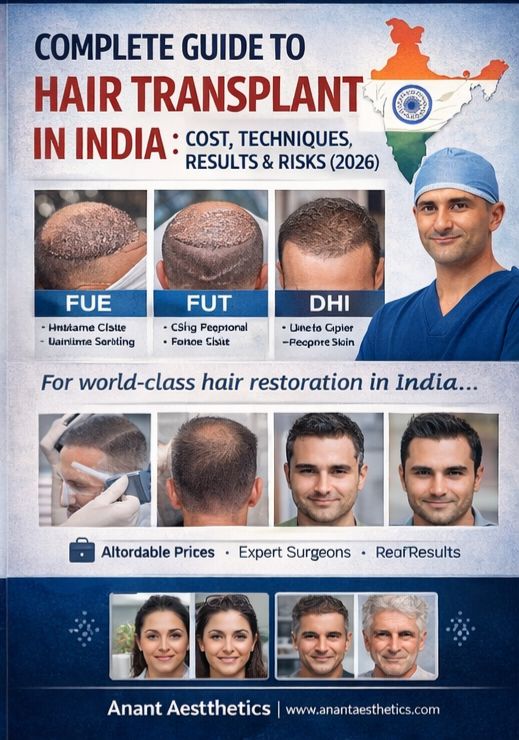
Types of Hair Transplant Techniques
Choosing the right technique is crucial for achieving a natural look. Modern clinics in India primarily utilize three advanced methods:
- Follicular Unit Extraction (FUE): This is the most popular method. It involves extracting individual hair follicles from the donor area (usually the back of the head) using a micro-punch tool and transplanting them into the thinning areas. It leaves no linear scars and has a quick recovery time.
- Follicular Unit Transplantation (FUT): Also known as the "strip method," this involves removing a small strip of scalp from the donor area, from which individual grafts are dissected. While it leaves a linear scar, it is often recommended for patients requiring a high volume of grafts in a single session.
- Direct Hair Implantation (DHI): An evolution of FUE, DHI uses a specialized tool called a Choi Implanter Pen. This allows the surgeon to control the depth, direction, and angle of each hair follicle without the need for prior channel creation, often leading to higher density and faster healing.
Who is an Ideal Candidate?
Not everyone with hair loss is an immediate candidate for surgery. A thorough evaluation involves the Norwood Scale, which grades the severity of male pattern baldness. Ideal candidates typically have:
- Stable hair loss patterns.
- Sufficient healthy donor hair at the back or sides of the scalp.
- Realistic expectations regarding the outcome.
- Good overall health to ensure proper healing.
Step-by-Step Procedure
The journey to a fuller head of hair involves a meticulous process designed for safety and precision:
- Consultation & Mapping: The surgeon designs the new hairline and calculates the required number of grafts.
- Preparation: The donor area is trimmed, and local anesthesia is administered to ensure a painless experience.
- Extraction: Grafts are carefully harvested using FUE or FUT techniques.
- Graft Preservation: Extracted follicles are kept in a specialized solution to maintain their vitality.
- Implantation: The surgeon creates tiny incisions (channels) and strategically places the grafts to mimic natural hair growth patterns.
Connect with the doctor Follow us on Instagram Locate us
Cost of Hair Transplant in India
The cost of a hair transplant in India is significantly lower than in the US, UK, or Australia, without compromising on quality. Pricing is generally calculated per graft. Factors influencing the total cost include:
- The City: Metropolitan hubs like Delhi or Mumbai may have higher overheads compared to specialized clinics in growing medical hubs.
- Clinic Reputation: Premium clinics with advanced infrastructure and high success rates may charge more.
- Surgeon’s Expertise: The experience and credentials of the performing surgeon are vital factors.
- Technique Used: DHI and robotic FUE are typically more expensive than standard FUE or FUT.
Results Timeline: What to Expect
Patience is key when it comes to hair restoration. Here is a general month-by-month guide:
- Month 1: The "Shock Loss" phase. Most transplanted hairs will fall out; this is a normal part of the process.
- Months 2-3: The follicles enter a resting phase. New growth is minimal.
- Months 4-6: Noticeable new hair begins to sprout. The hair may initially be thin but will thicken over time.
- Months 9-12: Significant coverage and density are achieved.
- Month 18: Final results are visible, showing the full impact of the transplant.
Risks and Complications
While generally safe, hair transplantation is a surgical procedure and carries some risks, including:
- Infection: Rare, but possible if post-operative care is neglected.
- Folliculitis: Inflammation of the hair follicles as new hair breaks through.
- Unnatural Results: Often caused by poor hairline design or incorrect graft angling by inexperienced practitioners.
- Scarring: Minimal in FUE, but more prominent in FUT.
Choosing the Right Clinic
To ensure a successful outcome, look for the following when selecting a clinic:
- Board Certification: Ensure the surgeon is qualified in plastic surgery or dermatology.
- Infrastructure: The clinic should maintain high standards of hygiene and use the latest technology.
- Before & After Portfolio: Review consistent, high-quality results from previous patients.
- Patient Reviews: Look for honest feedback regarding the consultation and aftercare process.
About Anant Aesthetic Clinic
Anant Aesthetic Clinic is a premier destination for those seeking excellence in hair restoration and aesthetic care. Led by the highly skilled duo of Dr. Sumit Toor and Dr. Pratibha Toor, the clinic is dedicated to providing personalized treatments that combine medical precision with an artistic touch. With a focus on natural-looking results and patient safety, Anant Aesthetic Clinic utilizes the latest advancements in hair transplant technology to help patients regain their confidence.
Medical Tourism in India
India has become a top choice for international patients due to the availability of English-speaking medical staff, ease of travel, and the ability to combine a world-class medical procedure with a visit to one of the world's most culturally rich countries. The high volume of procedures performed in India means that Indian surgeons are among the most experienced globally.
Frequently Asked Questions (FAQs)
- Is a hair transplant permanent? Yes, the transplanted hair is taken from DHT-resistant areas and is intended to last a lifetime.
- Does the procedure hurt? Local anesthesia is used, so you won't feel pain during the surgery. Some mild discomfort may occur during recovery.
- How much does 2000 grafts cost in India? Costs vary, but it typically ranges from ₹60,000 to ₹1,50,000 depending on the clinic and technique.
- Can women undergo hair transplants? Yes, women with female pattern hair loss or high hairlines are often excellent candidates.
- What is the success rate? In reputable clinics, the graft survival rate is usually above 90-95%.
- When can I wash my hair after surgery? Usually after 48 to 72 hours, following specific instructions from your surgeon.
- FUE vs. FUT: which is better? FUE is better for those wanting to avoid scars; FUT is often better for maximum graft numbers.
- Can I wear a cap after the procedure? You should wait at least 7-10 days to avoid putting pressure on the new grafts.
- Are there any long-term side effects? No, there are no known long-term health risks associated with hair transplants.
- What is the best age for a transplant? Generally, patients over 25 are preferred as hair loss patterns become more predictable.
- How long does the surgery take? Depending on the number of grafts, it can take 4 to 8 hours.
- Can body hair be used for a transplant? Yes, hair from the beard, chest, or back can be used if the scalp donor area is insufficient.
- Will the results look natural? Yes, if performed by a skilled surgeon who understands hairline design and graft angling.
- Do I need to take medication after the transplant? Often, Minoxidil or Finasteride is recommended to maintain your existing non-transplanted hair.
- When can I resume exercise? Light walking after 3 days, but avoid strenuous exercise for at least 2-3 weeks.
- Can I smoke or drink alcohol? It is advised to avoid both for at least a week before and after surgery to ensure proper blood flow and healing.
- How soon can I travel after surgery? Most patients are fit to fly the next day, though resting for 48 hours is ideal.
- Can gray hair be transplanted? Yes, gray hair can be successfully transplanted just like pigmented hair.
- Can a failed transplant be fixed? Yes, corrective surgery can often improve the appearance of a previous poor transplant.
- Is PRP better than a hair transplant? PRP is for thinning hair; a transplant is for restoring hair in bald areas. They are often used together.
- Will there be visible scarring? FUE leaves tiny dot scars that are virtually invisible; FUT leaves a thin linear scar.
- How many sessions will I need? Most patients achieve their goals in one session, but severe baldness may require a second.
- Is Finasteride mandatory? It is not mandatory but highly recommended to prevent further loss of native hair.
- What is the best sleeping position? Sleeping with your head elevated at a 45-degree angle for the first few nights helps reduce swelling.
- Why is India preferred over Turkey? India offers highly regulated medical standards, experienced surgeons, and excellent communication in English.
CTA: For world-class hair restoration, trust Anant Aesthetics. Visit www.anantaesthetics.com
Anant Aesthetic Clinic, Adampur