

When considering a hair transplant, most patients focus on the hairline and the areas where they want more coverage. However, the success of any hair restoration journey depends heavily on a factor that is often overlooked: the donor area. In the world of hair transplantation, the donor area is considered a limited resource. Unlike a bank account where you can deposit more funds, your donor hair is a finite supply that must be managed with extreme care to ensure lasting results.
What is the Donor Area?
The donor area refers to the regions of the scalp where hair follicles are genetically resistant to the effects of Dihydrotestosterone (DHT), the hormone responsible for male pattern baldness. Typically located at the back and sides of the head (the occipital and temporal regions), these follicles are considered "permanent." When transplanted to thinning areas, they retain their genetic resistance and continue to grow for a lifetime.
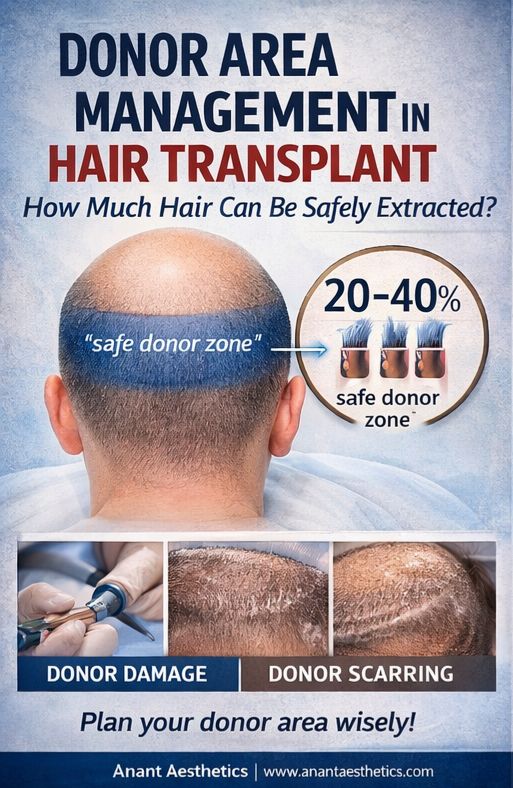
The health and density of this zone are the foundation of a successful transplant. If the donor area is handled poorly, it can compromise not only the current procedure but also any future touch-ups or secondary transplants that may be needed as natural hair loss progresses.
Safe Extraction Limits: How Much Hair Can We Use?
A common misconception is that a surgeon can move as much hair as needed to achieve full density. In reality, there are strict safe extraction limits to prevent the donor site from looking thin or depleted. Generally, surgeons aim to extract between 20% and 40% of the available hair in the safe donor zone.
Several factors influence these limits:
- Follicular Density: Patients with naturally thick hair have more leeway.