

Introduction to Exosomes for Hair Restoration
Hair loss is a common concern that affects millions of people worldwide, often impacting self-confidence and quality of life. While traditional treatments like medications and hair transplants have been the standard for years, the field of regenerative medicine is introducing groundbreaking alternatives. One of the most promising advancements in this space is exosomes for hair restoration. This cutting-edge therapy offers a non-surgical way to stimulate hair follicles and promote natural regrowth using the body’s own signaling mechanisms.
What Are Exosomes?
Exosomes are tiny, microscopic vesicles—essentially small "messenger" bubbles—released by cells. Their primary job is to carry important information, such as proteins, lipids, and genetic material, from one cell to another. In the context of aesthetics, they act as powerful signaling molecules that tell dormant or aging cells to repair themselves and function more efficiently.
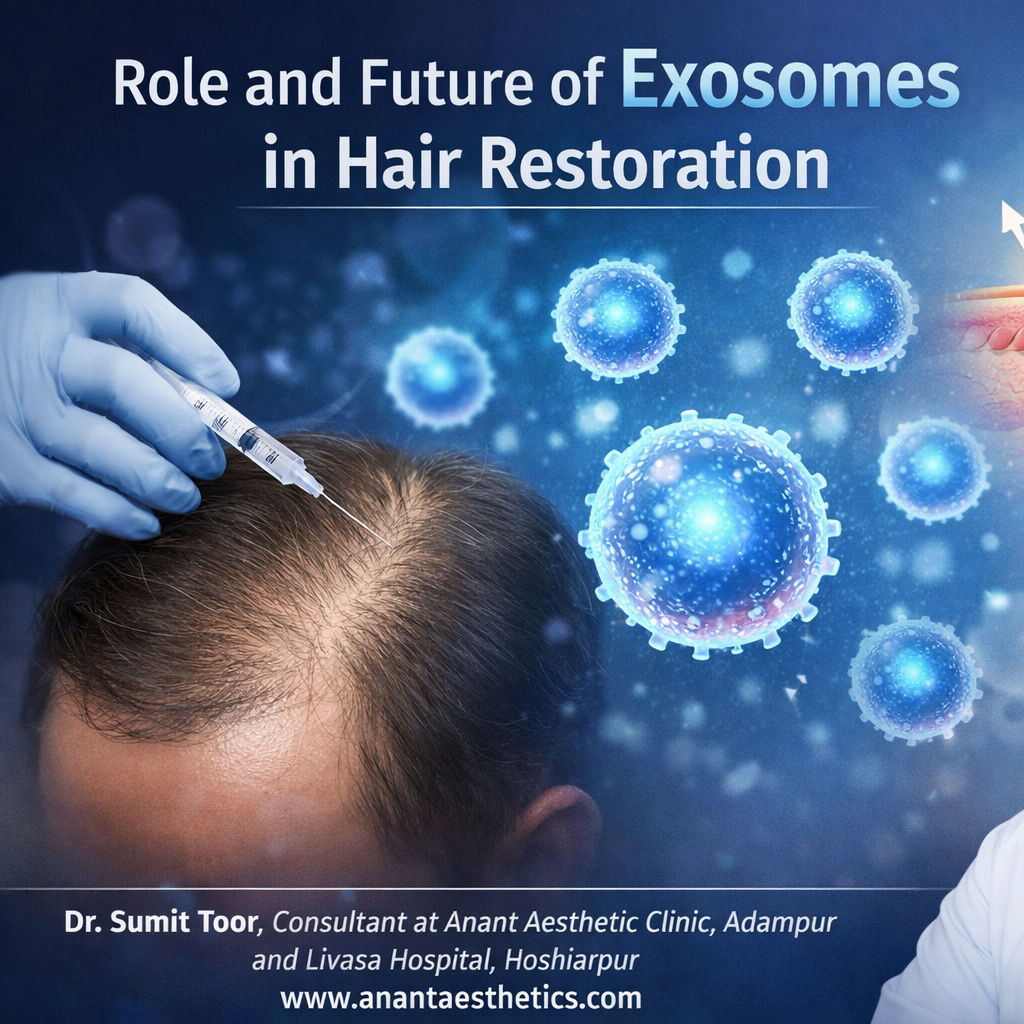
Many patients ask how this differs from Platelet-Rich Plasma (PRP) therapy. While PRP relies on the growth factors found in your own blood platelets, exosome therapy uses concentrated, lab-purified signaling vesicles. Exosomes often contain a much higher concentration of growth factors and signaling molecules than PRP, making them a potent tool for cellular regeneration.
How Exosomes Help in Hair Restoration
The role of exosomes for hair restoration lies in their ability to "reboot" the hair growth cycle. Here is how they work:
- Cell Signaling: They send signals to hair follicle cells to move from the resting phase (telogen) into the active growth phase (anagen).
- Follicle Stimulation: They help repair damaged follicles and provide the necessary instructions for hair to grow thicker and stronger.
- Anti-inflammatory Effects: By reducing inflammation around the scalp, exosomes create a healthier environment for hair to thrive.
- Improved Blood Flow: They encourage the formation of new blood vessels, ensuring that follicles receive the nutrients they need.
Who Is a Candidate for Exosome Therapy?
Exosome therapy is highly versatile and can be used for various types of hair thinning. It is particularly effective for:
- Male and Female Pattern Hair Loss: Also known as androgenetic alopecia, this is the most common cause of thinning.
- Early-Stage Thinning: Patients who are just beginning to notice a loss of density often see the best results.
- Adjunct to Hair Transplant: Using exosomes alongside a hair transplant can improve the survival rate of grafted follicles and speed up the healing process.
The Procedure Overview
The process of receiving exosomes for hair restoration is straightforward and minimally invasive:
- Consultation: A thorough scalp examination is performed to ensure you are a good candidate.
- Preparation: The scalp is cleaned, and a topical numbing agent may be applied to ensure comfort.
- Injection: The exosome solution is carefully injected into the thinning areas of the scalp using a very fine needle.
The entire procedure usually takes less than an hour. There is virtually no downtime, and most patients return to their normal activities immediately. You may experience slight redness or mild tenderness for a day or two, but significant discomfort is rare.
Results and Expectations
Patience is key when it comes to regenerative treatments. While some patients notice improvements in hair texture quickly, the most visible results typically appear between 3 to 6 months after treatment. This is because the hair follicles need time to respond to the signals and produce new growth.
Depending on the severity of hair loss, 1 to 3 sessions may be recommended. During your consultation, a personalized plan will be created to help you achieve realistic and lasting outcomes.
Advantages of Exosome Therapy
Why choose exosomes for hair restoration over other methods? The benefits include:
- Non-Surgical: No incisions, stitches, or scars.
- Minimal Downtime: Perfect for busy individuals who cannot afford a long recovery.
- Potent Regeneration: Offers a higher concentration of growth factors compared to traditional PRP therapy.
Limitations and Safety Concerns
While the future of exosomes is bright, it is important to stay informed. The regulatory landscape for exosome products is still evolving, and the quality of the product depends heavily on the laboratory where it was produced. Because this is a newer field, clinical evidence is still growing. It is essential to receive this treatment from a qualified medical professional who uses high-quality, ethically sourced products.
The Future of Exosomes in Hair Restoration
Research is ongoing into how exosomes can be combined with other treatments like microneedling or laser therapy to enhance results. As we learn more about cellular signaling, exosomes for hair restoration are expected to become a cornerstone of regenerative aesthetics, potentially offering even more targeted solutions for hair regrowth.
Frequently Asked Questions
Is exosome therapy safe?
When performed by a qualified specialist using lab-tested products, exosome therapy is generally considered safe with a low risk of adverse reactions.
How is it different from PRP?
PRP uses your own blood, while exosome therapy uses a concentrated solution of signaling vesicles that are often more potent and do not require a blood draw.
How long do results last?
Results can last for a year or more, though maintenance sessions may be recommended to sustain hair density.
Who is the ideal candidate?
Individuals in the early to moderate stages of hair thinning who still have active hair follicles are the best candidates.
Are multiple sessions required?
While some see results after one session, a series of treatments is often recommended for optimal hair regrowth.
Conclusion
Exosome therapy represents a major leap forward in the fight against hair loss. By harnessing the power of cellular communication, it offers a natural-looking and effective way to restore your hair. If you are looking for a non-surgical solution to thinning hair, we encourage you to schedule a consultation with a specialist to see if this treatment is right for you.
Dr. Sumit Toor
Anant Aesthetic Clinic, Adampur
www.anantaesthetics.com