

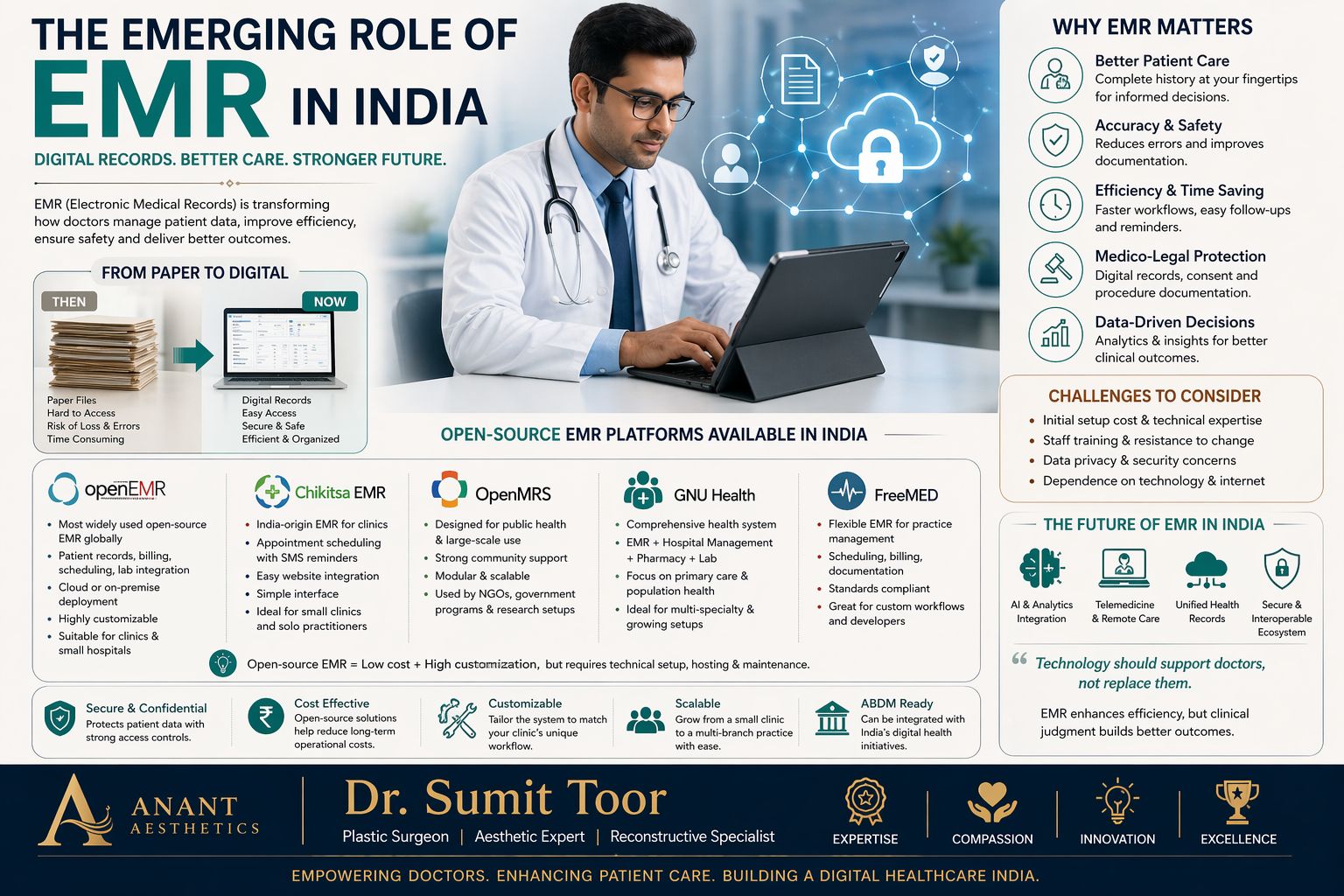
As a practicing clinician in India, I have witnessed firsthand the monumental shift in how we manage patient care. For decades, the rustle of paper files and the frantic search for a patient's previous prescription were staples of the Indian clinic. However, the landscape of digital healthcare India is changing rapidly. The transition from paper-based records to Electronic Medical Records (EMR) is no longer just a luxury for high-end hospitals; it has become a necessity driven by efficiency, rising patient expectations, and a commitment to improved clinical safety.
Understanding EMR: Beyond Digital Paper
In simple terms, an EMR is a digital version of a patient's paper chart. It contains the medical and treatment history of the patients in one practice. But it is much more than just a scanned document. A robust EMR system improves documentation accuracy, ensures instant accessibility of records, and provides seamless continuity of care. Unlike traditional paper records that can be lost, damaged, or misinterpreted due to handwriting, EMRs offer a clear, searchable, and permanent history of a patient's health journey.
The Digital Push: EMR in India
The adoption of EMR in India is accelerating at an unprecedented pace. This growth is fueled by several key factors:
- Government Initiatives: Programs like the Ayushman Bharat Digital Mission (ABDM) and the National Digital Health Mission are creating a framework for a unified digital healthcare ecosystem.
- Private Sector Growth: Private clinics and hospitals are digitizing to stay competitive and meet the demands of a tech-savvy population.
- Patient Expectations: Modern patients expect transparency. They want their records available on their smartphones and appreciate the efficiency.
About Anant Aesthetic Clinic
Run by the esteemed Dr. Sumit Toor and Dr. Pratibha Toor, Anant Aesthetic Clinic is at the forefront of integrating advanced digital healthcare solutions with premium aesthetic treatments. Our commitment to utilizing modern EMR systems ensures that every patient receives personalized, transparent, and highly efficient care.
📍 Anant Aesthetic Clinic, Adampur