

Understanding Hypertrophic Scars
Hypertrophic scars are a common concern for patients following surgery, burns, or traumatic injuries. These scars are characterized by their raised, firm, and often red appearance. Unlike keloids, hypertrophic scars remain within the boundaries of the original wound, but they can still cause significant physical discomfort, such as itching or restricted movement, and emotional distress due to their visibility.
Choosing the right topical treatment is a critical step in the scar management process. Early intervention with evidence-based products can significantly improve the final aesthetic outcome and prevent the scar from becoming more prominent. Two of the most frequently recommended options in dermatology and cosmetic surgery are Contractubex and Vaniza Gold. While both aim to improve scar appearance, they utilize very different mechanisms of action.
What is Contractubex?
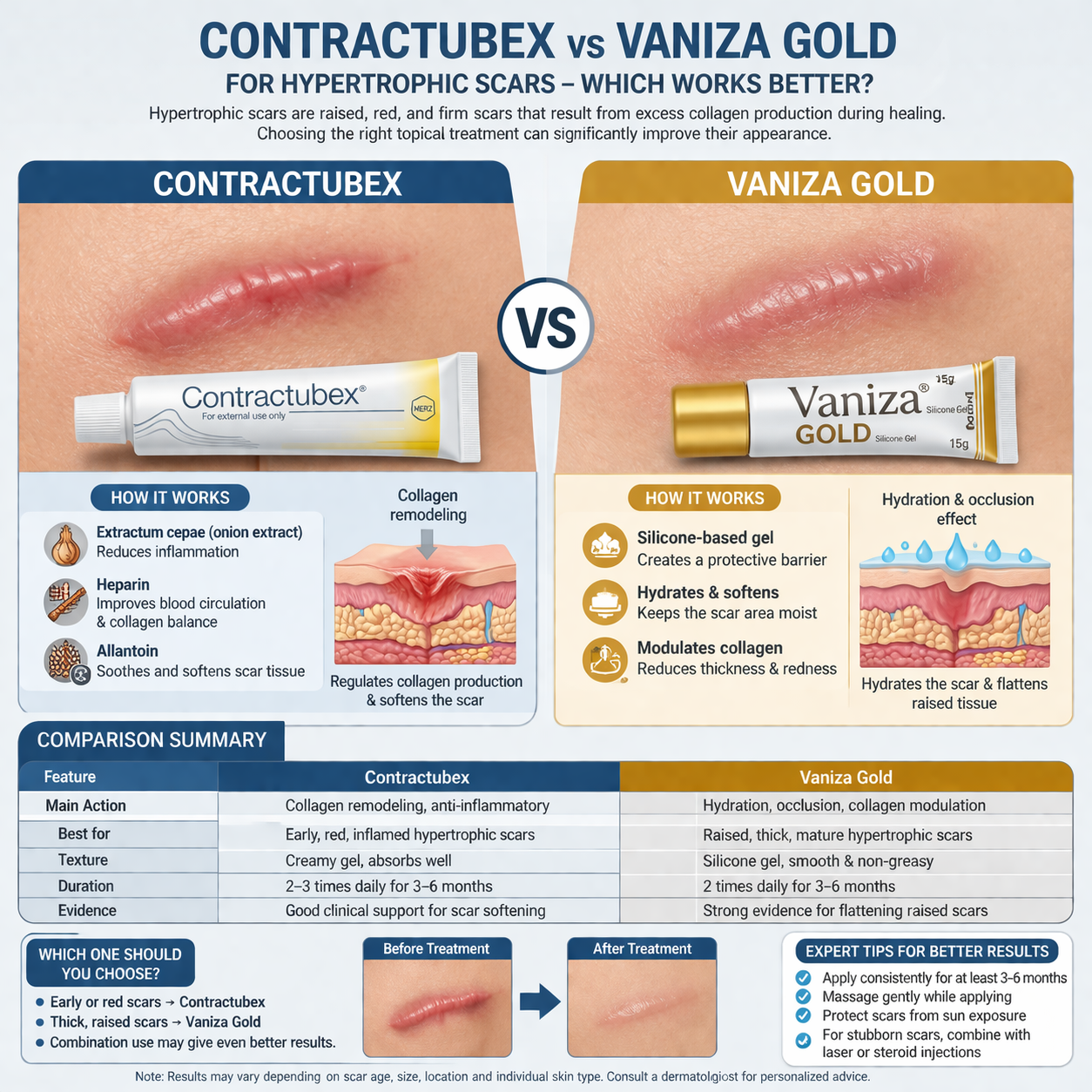
Contractubex is a well-established scar treatment that has been used globally for decades. It is a water-based gel that focuses on biological remodeling of the scar tissue. Its effectiveness is derived from a unique combination of three active ingredients:
- Extractum Cepae (Onion Extract): This ingredient provides potent anti-inflammatory and bactericidal properties. It helps inhibit the overproduction of fibroblasts, which are the cells responsible for creating excess collagen in scars.
- Heparin: Known for its anticoagulant properties, heparin in this context helps to soften the tissue structure and reduce swelling. It also promotes hydration of the scar tissue.
- Allantoin: This component promotes wound healing and has a soothing effect, which helps reduce the itching often associated with hypertrophic scars. It also enhances the penetration of the other active ingredients.
What is Vaniza Gold?
Vaniza Gold represents a different approach to scar management, primarily utilizing the benefits of silicone. Silicone-based gels are widely considered the "gold standard" in non-invasive scar treatment. Vaniza Gold works by creating a thin, flexible, and waterproof barrier over the scar.
The primary mechanism of Vaniza Gold is occlusion and hydration. By sealing the scar from the external environment, it prevents moisture loss (transepidermal water loss). This increased hydration signals the body to scale back collagen production, leading to a flatter, softer, and less red scar over time. Some formulations of Vaniza Gold may also include additional antioxidants or skin-conditioning agents to further support the skin barrier.
How Hypertrophic Scars Form
To understand which treatment is better, it is helpful to understand why these scars form in the first place. When the skin is injured, the body rushes to repair the gap by producing collagen. In a normal healing process, this collagen is laid down in an organized fashion. However, in the case of a hypertrophic scar, the body produces excess collagen.
This overproduction is often triggered by prolonged inflammation or mechanical tension on the wound. If a wound is located over a joint or an area that moves frequently, the constant stretching can signal the body to produce more scar tissue to "strengthen" the area, resulting in a raised, thickened scar.
Contractubex vs. Vaniza Gold: Mechanism Comparison
The choice between these two products often comes down to whether you need biological remodeling or physical protection:
- Biological Action: Contractubex works deeper within the skin's layers to actively inhibit the cellular processes that lead to scar formation. It is more of an "active" treatment.
- Physical Occlusion: Vaniza Gold works on the surface to create an ideal healing environment. By mimicking the skin's natural barrier, it allows the scar to mature under optimal hydration levels.
- Hydration vs. Remodeling: While Contractubex provides some hydration through heparin and allantoin, Vaniza Gold’s silicone base is superior for long-term moisture retention. Conversely, Contractubex is often more effective at addressing the inflammatory phase of a new scar.
Effectiveness in Hypertrophic Scars
Clinical evidence suggests that both treatments are effective, but their utility may vary based on the age of the scar. Contractubex is often favored for early-stage scars that are still actively red and inflamed, as its anti-inflammatory properties can help "calm" the scar down quickly.
Vaniza Gold and silicone gels, in general, are highly effective for both new and mature scars. Because silicone is inert and stays on the surface, it is often better tolerated for long-term use (3–6 months), which is the typical timeframe required for significant scar remodeling. Real-world expectations should be managed: neither product will make a scar disappear entirely, but they can make it significantly flatter, softer, and closer to the surrounding skin tone.
Application and Ease of Use
Patient compliance is the most important factor in scar treatment success. If a product is difficult to use, the patient is less likely to stick with the regimen.
- Contractubex: Usually requires application 2–3 times a day. It should be massaged gently into the scar tissue until fully absorbed. It is a water-based gel, so it dries relatively quickly but may leave a thin film that can peel.
- Vaniza Gold: Typically applied twice daily. It forms a self-drying, transparent sheet over the scar. Once dry, it can be covered with sunscreen or makeup, making it very convenient for facial scars.
Pros and Cons of Each
Contractubex
- Pros: Excellent anti-inflammatory properties; helps with itching; well-researched biological action.
- Cons: Requires massage for best results; can occasionally cause mild skin irritation or redness in sensitive individuals due to the onion extract.
Vaniza Gold
- Pros: Gold standard silicone technology; easy to apply; creates a protective barrier; very low risk of skin irritation.
- Cons: Can feel slightly greasy until it fully sets; generally more expensive than water-based gels.
Which One Should You Choose?
The "best" choice depends on your specific circumstances:
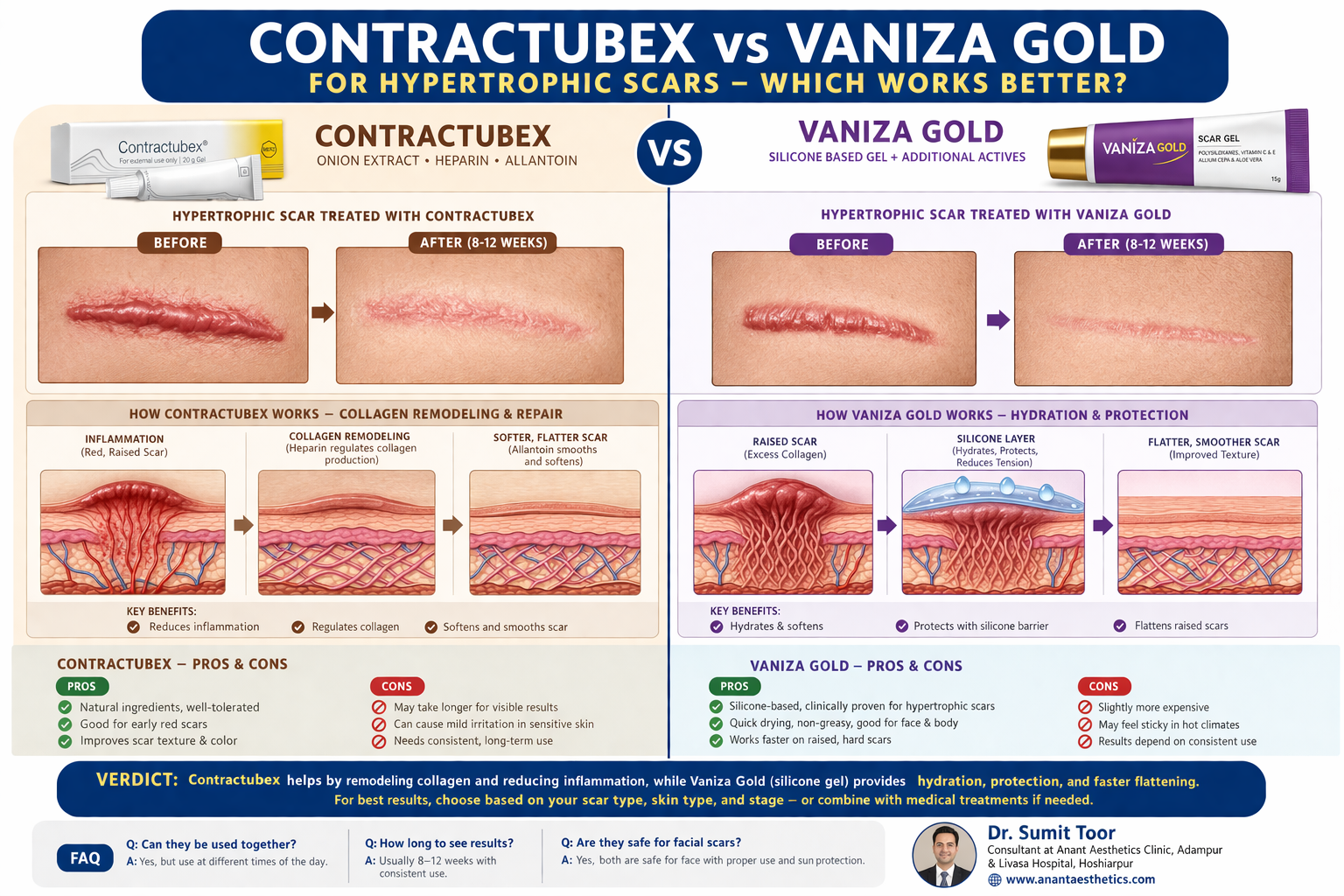
- Based on Scar Type: For a very fresh, red, and itchy scar, Contractubex may provide faster relief from symptoms. For a scar that is already raised and firm, Vaniza Gold is often the preferred choice for its superior softening and flattening capabilities.
- Based on Skin Type: If you have very sensitive skin, the silicone in Vaniza Gold is less likely to cause a reaction. If you have oily skin, the water-based Contractubex may feel more comfortable.
- Based on Location: For the face, Vaniza Gold is often preferred because it dries to a matte finish and can be worn under makeup. For body scars under clothing, either is suitable, though silicone gels are less likely to rub off onto fabric once dry.
When to Consider Advanced Treatments
Topical gels are the first line of defense, but they have limits. If a hypertrophic scar does not respond to topical treatment after 3 months, consult a specialist for advanced options:
- Steroid Injections: Corticosteroids can be injected directly into the scar to flatten it rapidly by breaking down collagen bonds.
- Laser Therapy: Vascular lasers (like PDL) can reduce redness, while fractional lasers can help resurface the texture of the scar.
- Microneedling / PRP: These treatments can help remodel older scar tissue by stimulating a more controlled healing response.
Expert Tips for Better Results
To get the most out of your scar treatment, follow these professional tips:
- Scar Massage: When applying Contractubex, use firm, circular motions. This mechanical action helps break up collagen bundles.
- Sun Protection: This is vital. UV exposure can cause permanent darkening (hyperpigmentation) of a healing scar. Always apply a high-SPF sunscreen over your scar gel once it has dried.
- Consistency: Scar remodeling is a marathon, not a sprint. You must use these products daily for at least 3 to 6 months to see significant changes.
Conclusion
Both Contractubex and Vaniza Gold are excellent tools for managing hypertrophic scars. Contractubex offers a biological, anti-inflammatory approach that is great for active, itchy scars, while Vaniza Gold provides the gold-standard silicone occlusion necessary for long-term flattening and hydration. In some cases, dermatologists may even recommend alternating the two for a comprehensive approach. Always consult with a professional to determine the best strategy for your specific skin type and scar history.
Frequently Asked Questions (FAQ)
1. Can I use Contractubex and Vaniza Gold together?
While you shouldn't layer them at the exact same time (as the silicone will prevent the Contractubex from absorbing), you can use Contractubex in the morning and Vaniza Gold at night, or vice versa.
2. How soon can I start using these gels after surgery?
You should only start topical scar treatments once the wound has completely closed and any sutures have been removed. Applying them to open wounds can interfere with the initial healing phase.
3. Will these products work on old scars?
They are most effective on scars less than two years old. While they may provide some softening for older scars, the results are typically much more subtle.
4. Is Vaniza Gold safe for children?
Yes, silicone-based gels like Vaniza Gold are generally considered safe for use on children, but it is always best to consult a pediatrician or dermatologist first.
Author Attribution:
Dr. Sumit Toor, Consultant at Anant Aesthetics Clinic, Adampur.
Website: www.anantaesthetics.com